

G2 released its Summer 2026 Reports on May 26, 2026 — 27,340 reports across 1,363 report-ready software categories (G2 has more than 2,000 categories total; "report-ready" means the subset with enough review volume to produce a Grid this quarter). This post walks you through what changed, what it means, and what to do next.
Looking for the latest quarter? G2 has since published its Fall 2026 Reports (28,042 reports, August 25, 2026), in which Agentic AI intake roughly tripled against the figure below.
What is a G2 report?
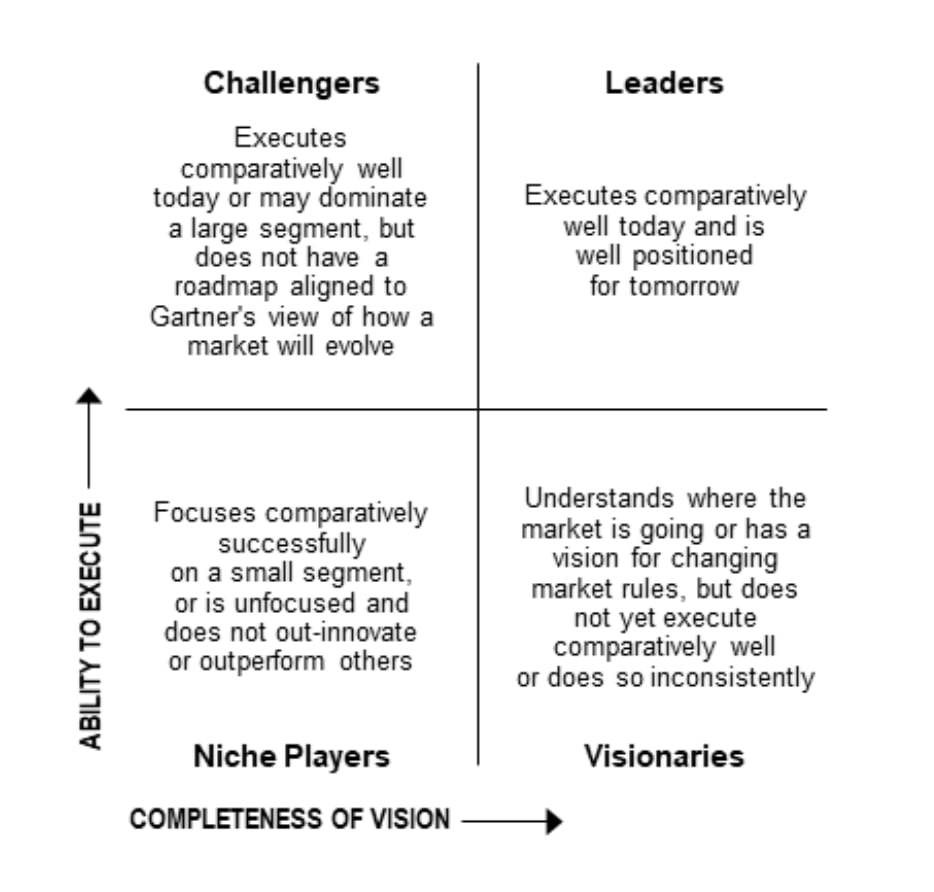
If you've heard of Gartner's Magic Quadrant, G2 reports are the crowdsourced cousin. Gartner's analysts spend months evaluating vendors and plotting them on a four-quadrant chart — an in-depth, analyst-led assessment. G2 builds its version algorithmically from user reviews, publishes it for free, refreshes it every quarter, and covers a much larger sweep of categories. Different instruments, same orientation problem they help a buyer solve: who leads this space?
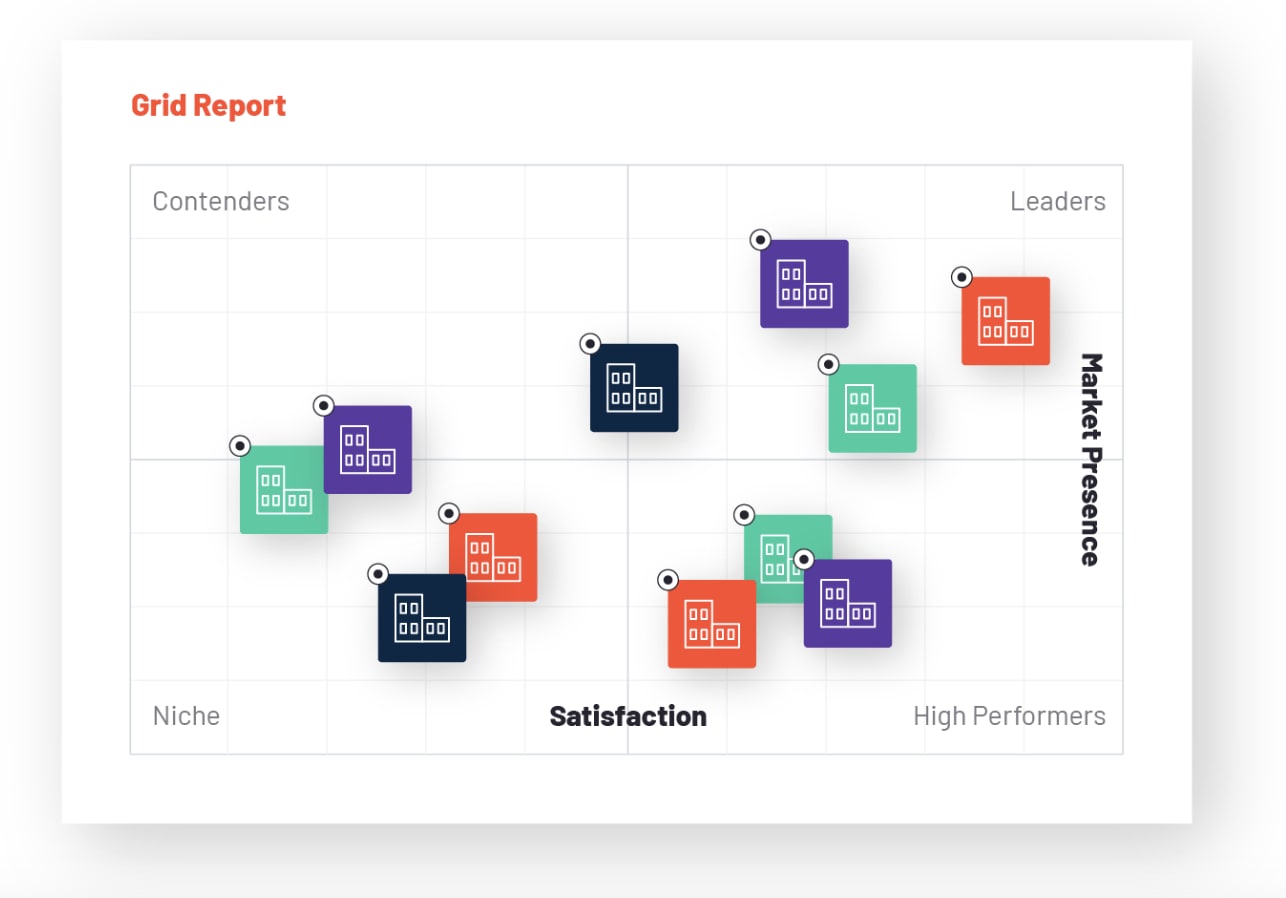
Every quarter, G2 takes a snapshot of review data and generates ranking reports for each software category. The main report is the Grid — a chart plotting products on Satisfaction (review scores) versus Market Presence (company size, review volume, web traffic). Products land in one of four quadrants: Leaders, High Performers, Contenders, or Niche. If your product lands in a quadrant, you earn a badge — those images companies post on LinkedIn every quarter. Grid badges require a paid G2 profile to display on your website, but the placement itself is earned through reviews. The badge is the main practical output: third-party validation for sales decks, websites, and marketing.
G2 doesn't publish one report per category. For each category, G2 generates the main Grid, plus Momentum reports (tracking which products are gaining traction fastest), Index reports for specific qualities (Usability, Implementation, Relationship, Results), and slices all of these by company size and region. One category can produce a dozen or more reports. "27,340 reports" is roughly 1,363 categories multiplied across all these variants. For a single-product SaaS company in 2-5 categories, appearing in 10-40 reports is normal.
What this quarter's data tells you
The Leader squeeze keeps tightening. Only 2% of products on G2 earned a Leader badge this quarter, down from 3% in the Spring 2026 reports and 4% in Spring 2025. Same caveat as last quarter: the 2% is calculated against G2's entire product pool, which includes a long tail of dormant profiles with few or no reviews. The more useful number — what percentage of Grid-eligible products (those with 10+ reviews in a category) earn Leader — isn't part of the announcement.
The trend is what matters here. Even if the underlying math is similar quarter to quarter, the headline number keeps moving in one direction. The total pool grows faster than the Leader slots do. If you're aiming for a Leader badge, category choice matters more this quarter than last.
AI categories still dominate growth — and the mix is shifting toward sales and marketing. Among the fastest-growing categories: Agentic AI (+26 products), AI Agents (+21), Answer Engine Optimization (AEO) (+14), and AI Sales Assistant (+11). AEO — software that helps companies track whether AI systems like ChatGPT and Perplexity are recommending their product — continues its run; the category launched in March 2025 with 7 products and grew to more than 150 by January 2026. Profound, an AEO platform and the only Leader on G2's first-ever AEO Grid in Winter 2026, went from launch to $1B valuation in under two years on the strength of that positioning — we walked through the mechanics in our Profound case study.
AI Sales Assistant joining this list is new. Last quarter the AI growth was concentrated in horizontal infrastructure (Agentic AI, AI for Business Operations, AI Customer Support). Now a sales-specific AI category has cracked the fastest-growing list — AI is moving into category-specific roles, and G2's taxonomy is keeping pace.
OpenAI just became the newcomer on G2's list of top-scored companies this season. That roster has historically been long-running enterprise software makers, so an AI-native company landing there stands out. It's also a small meta moment: G2 separately launched a Large Language Models category, which means G2 now ranks the same systems that increasingly pull from review platforms when generating software recommendations. A Semrush study G2 has referenced puts G2 among the top 20 most-cited domains in LLM responses, so the loop applies whether or not your product touches AI. Your reviews and directory placement are part of what those models read when buyers ask "what's the best tool for X." We wrote about how that works. For the inverse problem (an incumbent trying to reposition into AI but blocked by the categories on the shelf), see our teardown of Miro's category positioning.
Six new categories became report-ready. Among them: Zero Trust Platforms, Software Design Platforms, Population Health Management, Investor Reporting, Auto Shop Management, and Yard Management. When a category first becomes report-ready, few products have badges — earning a placement is meaningfully easier than in a mature category with hundreds of competitors. Whether to anchor your strategy on a new category is a separate question; some are stepping stones, some are dead ends.
Making sense of the leaderboard tables
G2's announcement includes several ranking tables. Here's what they measure.
"Companies with most reports" — Microsoft (5,181), Zoho (4,556), Salesforce (3,941), Google (3,734), SAP (3,434). This ranks product portfolio breadth. These companies have dozens or hundreds of products, each generating reports. Adobe added 704 reports this quarter — the largest single-quarter jump in the top 10 — which reflects more Adobe products qualifying in more categories. If you're a single-product company, this table measures a different game than the one you're playing.
"Products with most #1 rankings" — Google Workspace (383), Canva (327), HubSpot Marketing Hub (297), Slack (293), NinjaOne (293). Dominated by widely adopted products with large Market Presence scores. G2's Market Presence axis weighs employee count and revenue, which gives larger companies a structural advantage for #1 rankings.
"Top products by G2 Score" — Microsoft SharePoint (98.63), Adobe Photoshop (98.57), Visual Studio Code (98.51), Salesforce Customer Success (98.28), Articulate 360 (97.79). Looks different from the #1 rankings because it's calculated differently. Articulate 360, an e-learning authoring tool, sitting at #5 on this list is a good reminder: a smaller product can outscore household names when its review base is concentrated and strong.
Most improved: Attio, a CRM, climbed 143 spots inside its category. CRM is one of G2's most contested categories, so the move stands out. The pattern — concentrated review collection inside a single category — is the one most vendors use when competing for placement.
What matters for most vendors: Your placement in the Grid quadrant for your specific categories. That determines your badge. A smaller company with strong reviews lands as a High Performer (high satisfaction, lower market presence), which is a meaningful and realistic target. Our guide to how G2 Grid reports are calculated walks through the scoring behind that placement.
What to do next
The starting point is knowing where you stand. Where are you listed? What categories are you in? Do you have reviews? Are there badges you've earned and don't know about?
Blastra checks this for you. When you sign up, we scan your current directory presence across G2, Capterra, SourceForge, and other platforms — and show you what's there, what's missing, and where you should be. A security team we recently onboarded discovered a SourceForge Leader badge they didn't know about and listings being managed by people who'd since left the company.
If you want to earn a G2 badge: You need at least 10 reviews in a category to appear on the Grid, and a clean way to collect them, since incentivized or gated review asks can get flagged. The Fall 2026 reports have since published (August 25, 2026), so the next cycle is Winter 2027: according to G2's research agenda, reviews must be in by November 3, 2026, and the reports release December 1, 2026. Focus on 2-3 categories, especially newer ones with less competition, or consider creating a category if none fits your product. Aim for High Performer first; Leader is a longer game.
If you're already earning badges: Consider diversifying across directories. With G2's acquisition of Capterra, Software Advice, and GetApp closed in February 2026, more of the discovery surface sits inside one ecosystem. Presence on TrustRadius, PeerSpot, SourceForge, and others is a hedge — and AI systems cite multiple sources when recommending software, so spreading your reviewed footprint widens the surface they read from.
If managing all of this sounds tedious: It is. That's what we do.
Know where you stand across every directory
Blastra scans your presence on G2, Capterra, SourceForge, and dozens of other platforms — and shows you what's there, what's missing, and what to do next.
Or you can try navigating the Grid yourself. Dodge bad reviews, land in the right quadrant, earn the badge — all in 90 seconds.
BADGE SWEEPER
Navigate the grid. Dodge the bad reviews.
Click any cell in Ok to start. Right-click to flag. Long-press on mobile.
This post references G2's Summer 2026 Reports published May 26, 2026, and G2's publicly available scoring methodology documentation. Numbers reflect the data as published by G2 as of May 2026 and may change as reports are updated. Rankings and positions described here reflect how products are represented in G2's published reports, not Blastra's assessment of product quality. Blastra is not affiliated with, endorsed by, or sponsored by G2, Gartner, or any product named in this post; trademarks, logos and brand elements belong to their respective owners, and the Magic Quadrant diagram is Gartner's. GARTNER is a trademark of Gartner, Inc. and/or its affiliates.
Related
- G2 Fall 2026 Reports - The next quarter, when Agentic AI roughly tripled its intake
- How to Earn G2 Badges in 2026 — Badge requirements, paid vs. free profiles, and review thresholds
- How G2's AI Categories Work — AI categories on G2 and what they mean for your listing strategy
- How G2 Is Building G2.ai Into an Expertise Marketplace — What we found inside ai.g2.com's Blueprints platform
- G2 + Capterra Acquisition: What It Means for Vendors — Strategic analysis of the consolidation
- How to Get Ranked on G2 — G2's scoring algorithm, Grid placement mechanics, and review thresholds
- 25 Software Badges Decoded — Requirements for badges across G2, Capterra, SourceForge, TrustRadius, PeerSpot, and Gartner
- How to Get Reviews on G2 and Capterra — Verification rules, character minimums, and incentive options that stay within policy