


How cybersecurity players can gain visibility with buyers, analysts, AI systems, and investors
TL;DR
Who wants to miss out on an opportunity to be mentioned by AI and be found via search for "best [category name] software" and "alternative to [competitor name]"? One of the simplest ways to do so is to get listed on popular and niche software directories. Here is a curated list of the top software directories and review sites respected by cybersecurity buyers, investors and LLMs.
This guide provides an overview of the best listings platforms for cybersecurity companies in 2026 that help cyber vendors gain visibility with buyers, analysts, investors, and AI systems. These cybersecurity software directories play a major role in how modern decision-makers evaluate products and compare vendors. Learn how Blastra works to get your product listed where decision-makers act.
Why Software Directories Are Critical Today
AI assistants and search engines love citing online software directories—yellow-page-like structured catalogs that feature software arranged by categories, functionalities, competitors and often ranked by verified users, providing authentic reviews.
In a recent report from Profound, one of the most prominent B2B software directories G2 ranked in the top-10 in most cited sources for such platforms as ChatGPT and Perplexity. But AI recommendations are designed individually, based on a user context and are not limited to the first page of Google search. So no broad AI research can replicate what a 46 years old CISO on a 1,000 people manufacturing company in Spain who hates AWS but loves GCP will get for their "best cyber vendor for my GCP setup" query. For a deeper look at how AI visibility tools themselves stack up on these platforms, see our analysis of AI visibility tools ranked by review platform presence.
Hence—highly-targeted niche B2B software directories are the name of the game in 2026 as they play a critical role in search visibility—both AI and traditional online search.
The best thing about listing a company and product in a software directory is that it is a largely one-time effort with submission that then keeps paying off. And once directories listings are set, the marketing team can focus on ongoing efforts—founder-led LinkedIn activity, applying for industry awards, and boosting cyber SEO. As outlined in The Ultimate Guide to Cybersecurity Marketing, building authority in competitive security markets requires clear messaging, thought leadership, and buyer-specific content strategies that reinforce trust over time.
Understanding Cyber Software Directories
Directories are essentially catalogs, each with their own taxonomy of categories, subcategories and features. They classify and map cybersecurity products to their categories, which gives each product a structured presence online. Each directory listing usually undergoes verification by platforms catalog teams, and user reviews always require authentication, which often makes directories a more trusted source of information than the company's own website.
All these factors together make it simple for search engines and AI assistants retrieve products for:
- Best [category name] software
- Competitor comparisons
- "Alternatives to X" searches
- Market overviews
- General security product recommendations
Blastra divides software directories into two major buckets, depending of what they feature:
Product-focused directories — those that feature products. Each product is attributed to specific categories, and a listing contains extensive descriptions of functionalities, integrations, screenshots, and demo videos. Those directories offer comparisons of competing products and verified user reviews, which serve as a foundation for products ranking.
Company-focused directories — those are more interested in companies themselves. Then there is a team, funding status, and audience they serve. Products and key functionalities are also mentioned but there's less focus on usability and more on the overall trust signals for a company.
Ideally, a cybersecurity vendor appears in both product-focused and company-focused directories.
Below is our curated list of the top software directories for cybersecurity companies, used by CISOs, analysts, investors, and AI systems to evaluate tools. These cyber security vendor listings cover both product-focused and company-focused platforms.
Top 12 Cyber Directories for 2026 Summary
| Directory | Focus | Who is it for | DR | Traffic | Traffic Regions | Pricing | Effort | Beta | Reviews |
|---|---|---|---|---|---|---|---|---|---|
| Product | Enterprise security vendors | 73 | 0.07M | USA, India, UK, Russia | Freemium | Some effort | ✗ | ✓ | |
| Product | Vendors selling to enterprise | 92 | 2.1M | USA, Canada, India, UK, Germany | Freemium | Difficult | ✗ | ✓ | |
| Product | Mid-market vendors | 90 | 2.4M | USA, UK, Canada, Germany, Australia | Freemium | Difficult | ✗ | ✓ | |
| Product | Vendors prioritizing international visibility | 85 | 0.55M | USA, UK, Canada, Brazil, India | Freemium | Difficult | ✗ | ✓ | |
| Product | Vendors wanting curated visibility in the U.S. and Southeast Asia | 86 | 0.56M | USA, Canada, Philippines, Malaysia | Freemium | Difficult | ✗ | ✓ | |
| Product | Vendors across all segments | 91 | 2.57M | USA, India, UK, Canada, Germany | Freemium | Difficult | ✓ | ✓ | |
| Product | Vendors targeting technical users and developers | 93 | 22.4M | USA, India, China, Russia, Germany | Freemium | Difficult | ✓ | ✓ | |
| Product | Vendors with early customers who can provide detailed feedback | 84 | 0.31M | USA, India, Mexico, Nigeria, Australia | Freemium | Difficult | ✗ | ✓ | |
| Product | Vendors seeking PR-style visibility | 67 | 0.09M | USA, India, Nigeria, Philippines, Sweden | Freemium | Easy | ✗ | ✗ | |
| Company | Cyber companies wanting clean ecosystem recognition | 72 | 0.02M | USA, Canada, Australia | Paid | Some effort | ✗ | ✗ | |
| Company | Any cybersecurity company wanting investor visibility | 90 | 3.9M | USA, UK, India, Canada, Germany | Free | Easy | ✓ | ✗ | |
| Company | Israeli cybersecurity startups | 66 | 0.16M | Israel, USA, UK, India, Canada | Free | Some effort | ✓ | ✗ |


Note on metrics: DR (Domain Rating) is a metric from Ahrefs (0–100) estimating how strong a website's backlink profile is. Higher DR usually means better SEO visibility and more trustworthy domain. Traffic data is from Similarweb (Nov 2025).
Product-Focused Directories for Cyber Vendors
For reaching buyers, supporting comparisons, appearing in AI output, and building credibility with reviews.
1. PeerSpot
Enterprise software selection platform focused largely on cybersecurity and IT products.

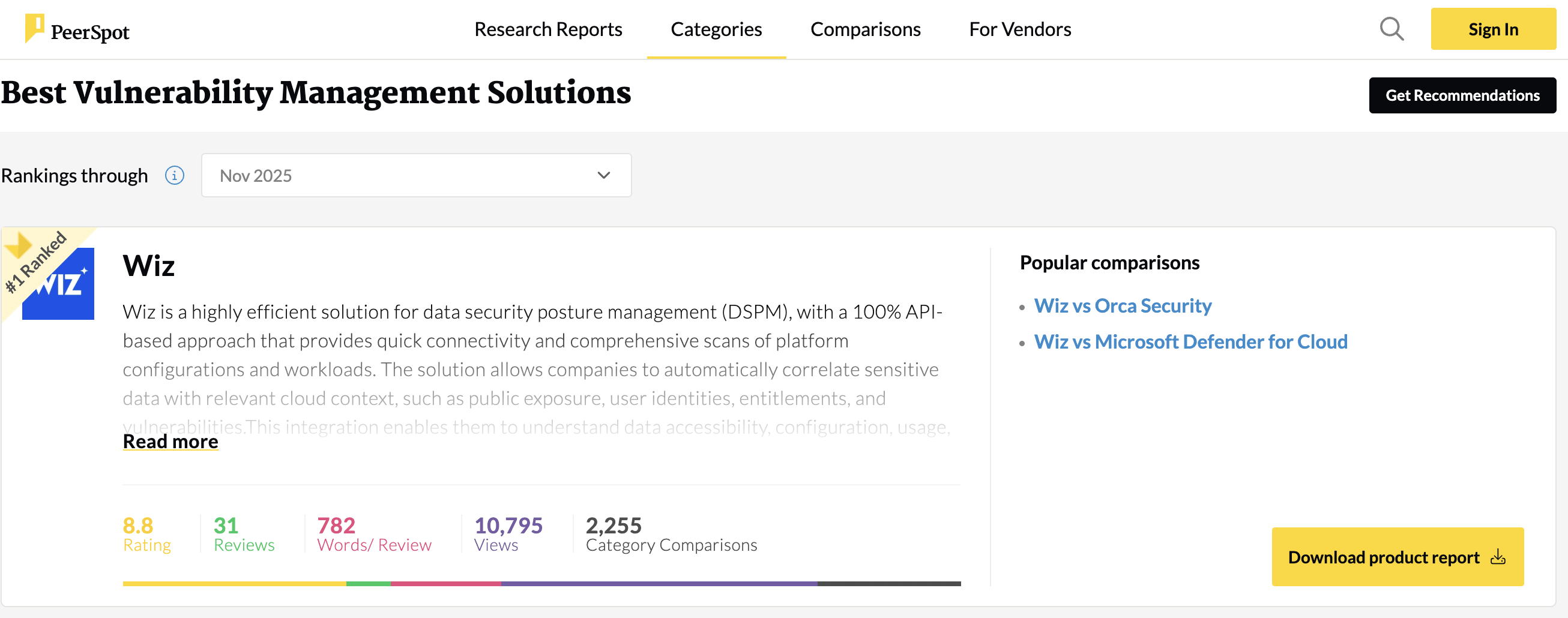
Formerly IT Central Station, PeerSpot is used by security teams in large organizations to access and share detailed, experience-based feedback. It has deep coverage of SIEM, SOAR, XDR, IAM, and other cyber categories, making it one of the most detailed public sources for enterprise-grade security product information and peer reviews. The directory is built around detailed product reports and comparisons involving extensive rankings by multiple parameters. Readers can access buying guides for listed products or categories and request calls with verified users who left product reviews. Many of those features are only available for the products that are opted for paid listings.
In addition, PeerSpot is an official partner and a first-party review collector for AWS Marketplace, helping vendors listed on AWS drive authentic reviews from their buyers to their AWS Marketplace listing.
As a cyber vendor, you have to be ready for PeerSpot and understand that it is not so much about the submission itself, it's a commitment to invest some budget and time into your profile once you are there. It's a liability as much as an asset and you have to be ready for it.
2. Gartner Peer Insights
Gartner's enterprise review platform with strong cyber category coverage; requires significant effort to submit and maintain listings.

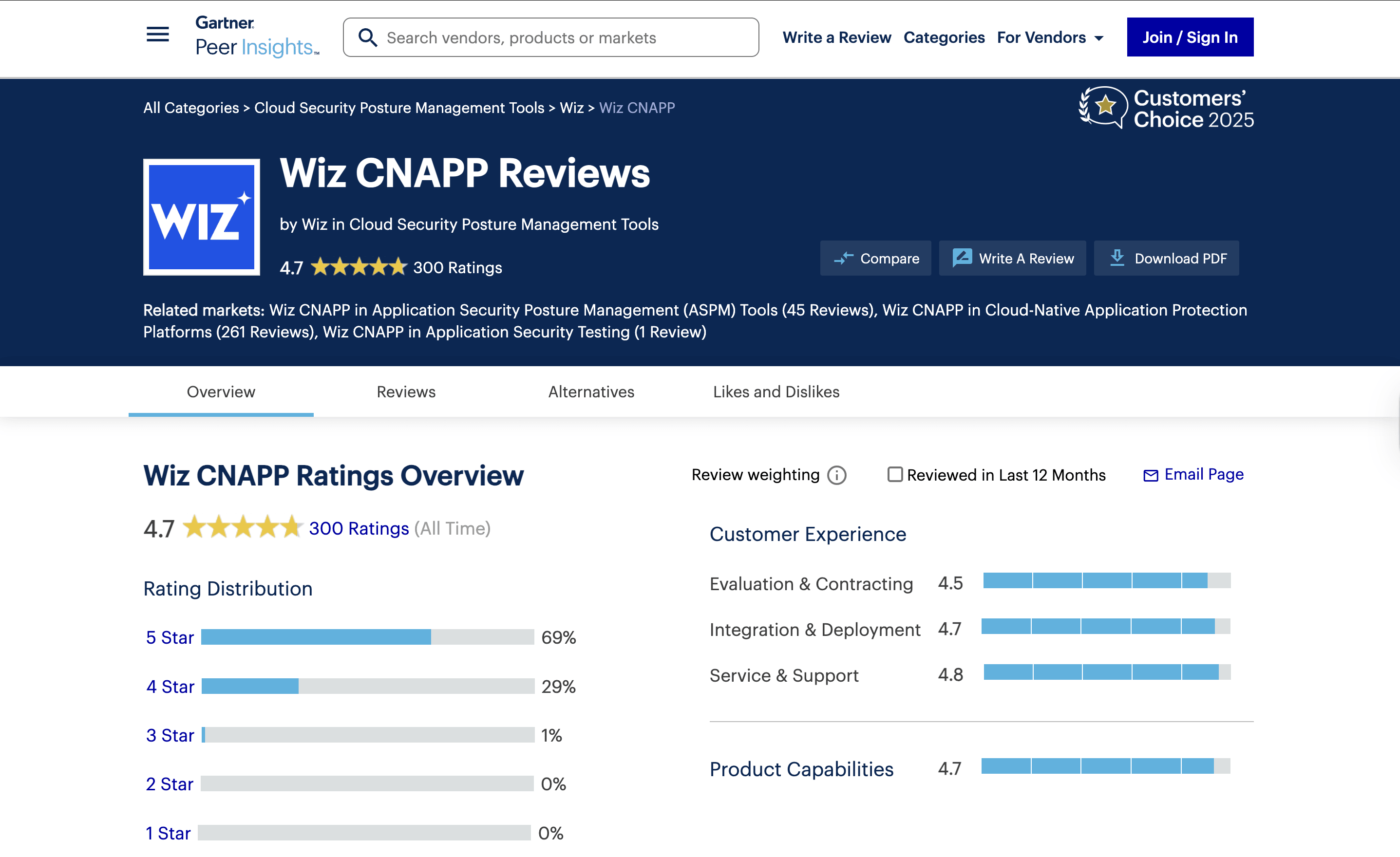
Gartner Peer Insights (GPI) is a trusted source of intelligence during enterprise procurement process. While it is not dedicated to cyber specifically, it offers structured, detailed cyber categories like cloud security, identity, endpoint protection, application security and more. Category pages generally rank well in category search results, with ratings, rankings, reviews and Voice of the Customer reports being taken into account by cyber buyers.
Each product listing starts not with the product information, but ratings, reviews, users likes and dislikes, and also includes extensive company details such as HQ, number of employees, if the company is private or public etc.
Same as with PeerSpot—having a profile on GPI requires an ongoing effort to cultivate reviews from buyers which serves both GPI (driving more traffic and keeping the data fresh) and more importantly the vendor (improving ranking). Being in control of a product listing on GPI also allows a vendor to claim a Capterra account, which opens access to the trinity of Software Advice, Capterra and GetApp (all three now owned by G2).
3. Capterra
Reputable G2-owned directory (formerly Gartner Digital Markets) with some security categories and strong SEO presence.

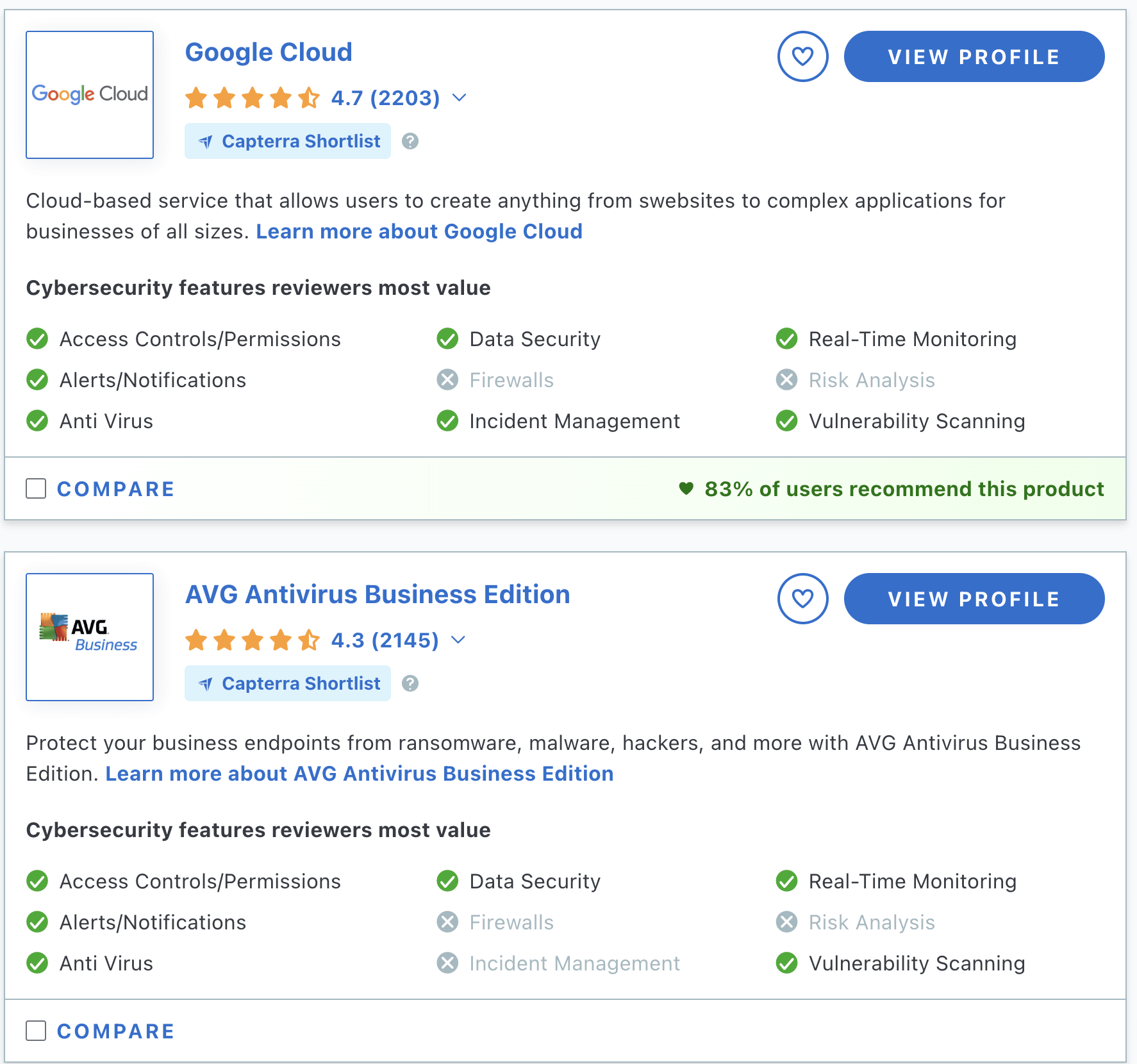
Capterra is a general software directory (one of the oldest ones on the web and the very first to introduce software user reviews). While it features more than 2,000 product categories, it only has less than a dozen security-related categories, which are quite generic. Yet it still ranks for searches such as "best [cyber category name] software". A serious benefit of Capterra is that it is localized for more than 50 countries and supports those queries not only in English but in dozens of languages, returning results from local domains such as ".de" or ".co.uk" which AI absolutely loves. The translations are made automatically and although you can customize them, we wouldn't recommend doing so as there's a high chance of forgetting to update the translations when refreshing the listing data.
Capterra is now owned by G2 (acquired from Gartner in February 2026) but is separate from Gartner Peer Insights, which means descriptions and reviews are not shared. So a small player should prioritize accordingly and most likely go with just one of them.
If a vendor is a fit for Capterra's audience, it's worth being there—the submission is free and quite straightforward. Also, keep in mind that the taxonomy and profile data are shared with GetApp and Software Advice so if a product fits GetApp and/or Software Advice, you get three listings almost for free.
4. GetApp
Sister site to Capterra and Software Advice, now part of G2 (formerly Gartner Digital Markets); shares taxonomy and reviews with Capterra.

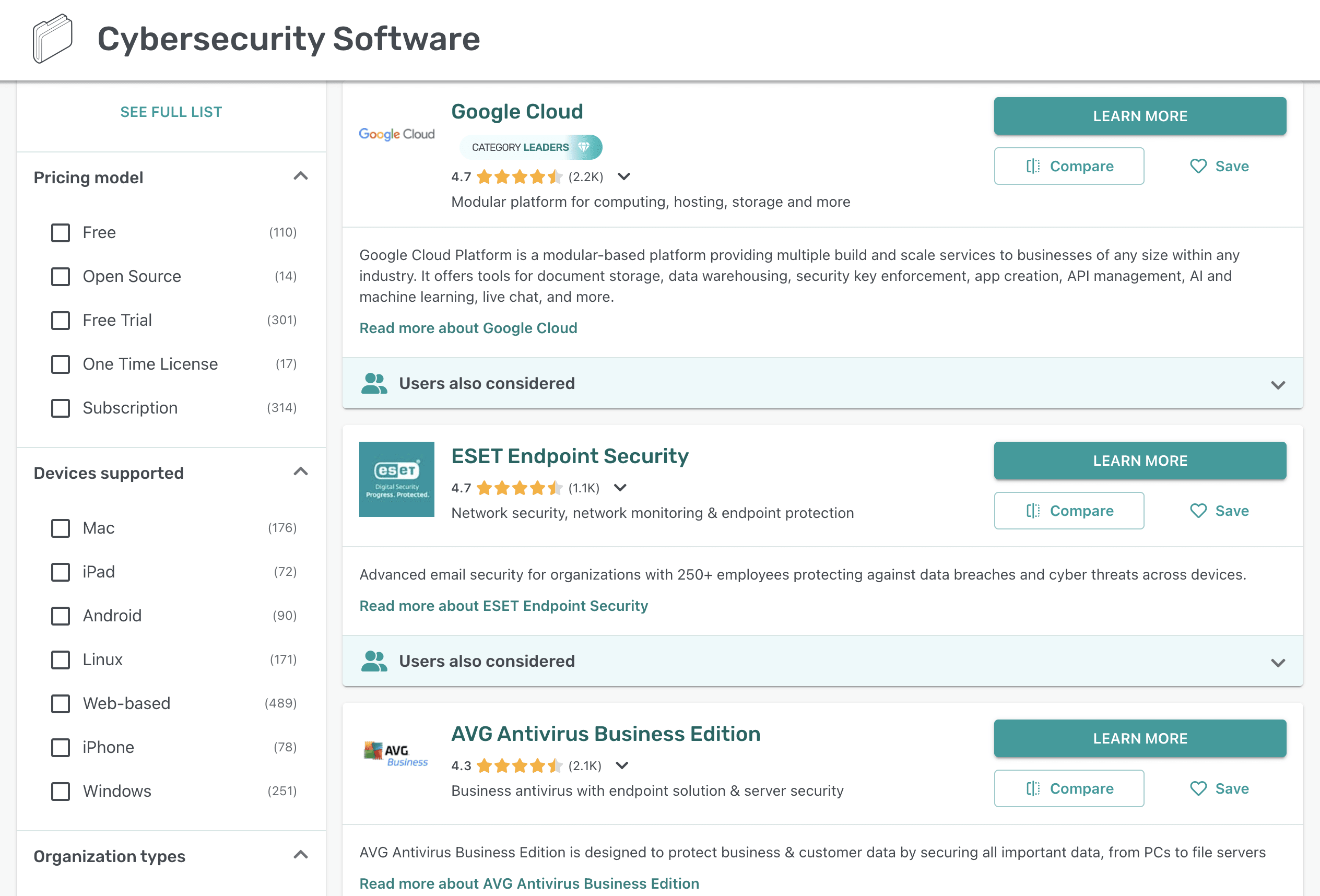
GetApp is now owned by G2 (acquired from Gartner in February 2026) and offers strong reach in EMEA and LATAM. It shares account, taxonomy and—most importantly—reviews with Capterra and Software Advice, making it an obvious choice for cyber vendors who opted out for Capterra. However, inclusion in GetApp is not automatic for Capterra product profiles—GetApp listing should be requested from within the vendor dashboard and populated with tailored information.
Same as with Capterra, if a cyber vendor is a fit, totally worth opening a listing—just keep in mind that you will need a few good reviews that will be shared among the GDM directories to improve ranking.
5. Software Advice
Sister site to Capterra and GetApp; focuses on buyer guidance and shortlists.

Software Advice is now owned by G2 (acquired from Gartner in February 2026) and is traditionally strong in guided comparisons and decision-support content, which increases visibility to buyers who prefer curated shortlists over open-ended searches. Just as GetApp, it shares account, taxonomy and—most importantly—reviews with Capterra, but the listing has to be requested, opened and populated with tailored information.
Once you have a vendor account on Capterra, opening a Software Advice listing is a no-brainer.
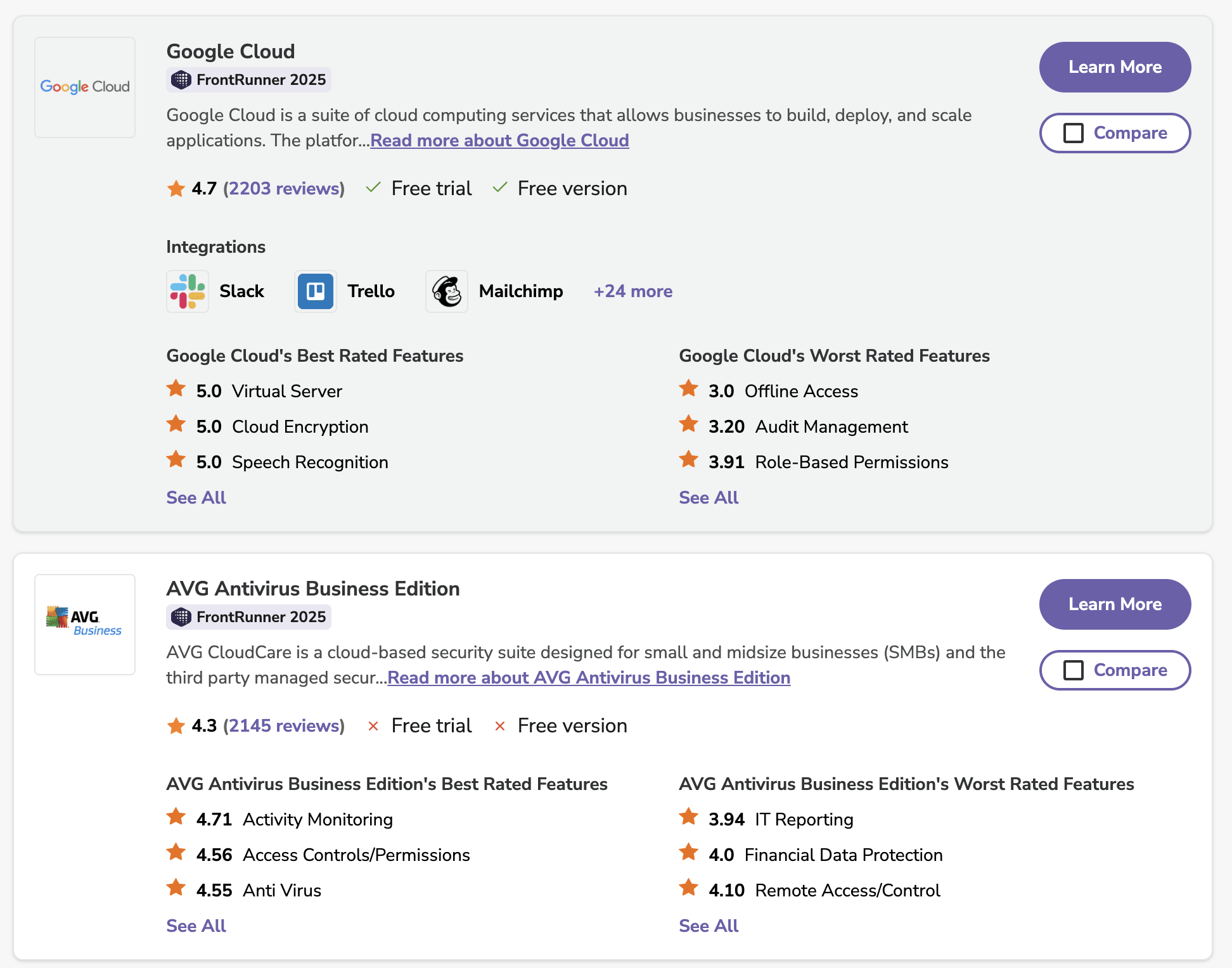
6. G2
Major B2B directory with trusted badges, awards, and grid reports.

G2 is one of the most respected and cited software directories out there. Over the past years they were one of the few who realized the value of their data for AI, so they doubled-down on it, proactively working to become the go to source for B2B software data for LLMs.
G2 is a general directory which—just like Capterra—features more than 2,000 software categories, but it is very respected among cyber buyers, including enterprise. Its taxonomy includes a much wider than Capterra range of cybersecurity categories from CSPM and CNAPP to IAM, SOAR, DAST/SAST, MDR, cloud workload protection and more.
One caveat however: unlike Capterra—which first existed as a directory and a marketplace and then added reviews—G2 was born with reviews in mind. Everything there is built around reviews. The common wisdom is better to have an unclaimed listing on G2 than claimed profile with a few aged reviews. So, once you are live on G2, you should start constantly gather fresh reviews (aim for at least 10 per quarter). Hard work, but as a reward, good vendors earn ranking, awards and badges which can be put on their websites and help increase conversions. Learn more about how to get ranked on G2.
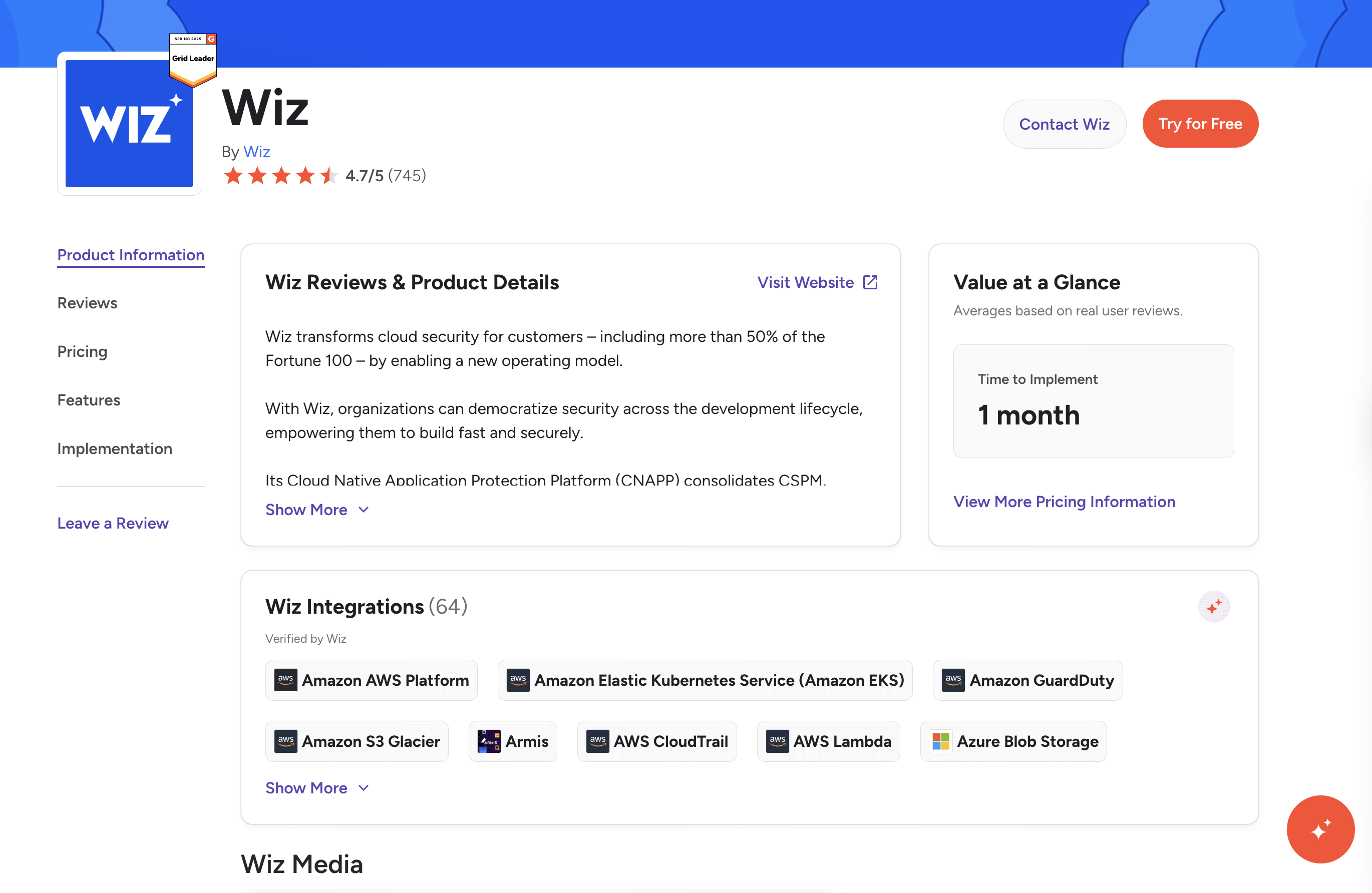
7. SourceForge
Originally an open-source projects directory which now lists proprietary tools. Strong technical audience. Syndicates listings to SaaS Stash and Trusted Business Tools.

Somehow SourceForge doesn't manage to attract as much attention as G2 or Gartner's family directories. Yet it has almost ten times more traffic (22M monthly users!) and it mostly caters to technical audience, perfect for cyber vendors. It supports quite extensive security categorization, features reviews and product rankings. Reviews there are important but feel less critical than on G2 for visibility. Also, reviews recency does not impact the scoring as it does on G2. Listings on SourceForge automatically appear on Slashdot and Top Business Software directories, which are also part of the SourceForge family. If you collect enough reviews, you can earn SourceForge's Leader or Top Performer badges — awarded seasonally to the top 5% and top 10% of highly reviewed products.
So while opening a SourceForge listing is a bit of a pain (you will probably have to claim or remove an outdated and duplicated listing from 5+ years ago), it's a worthy investment.
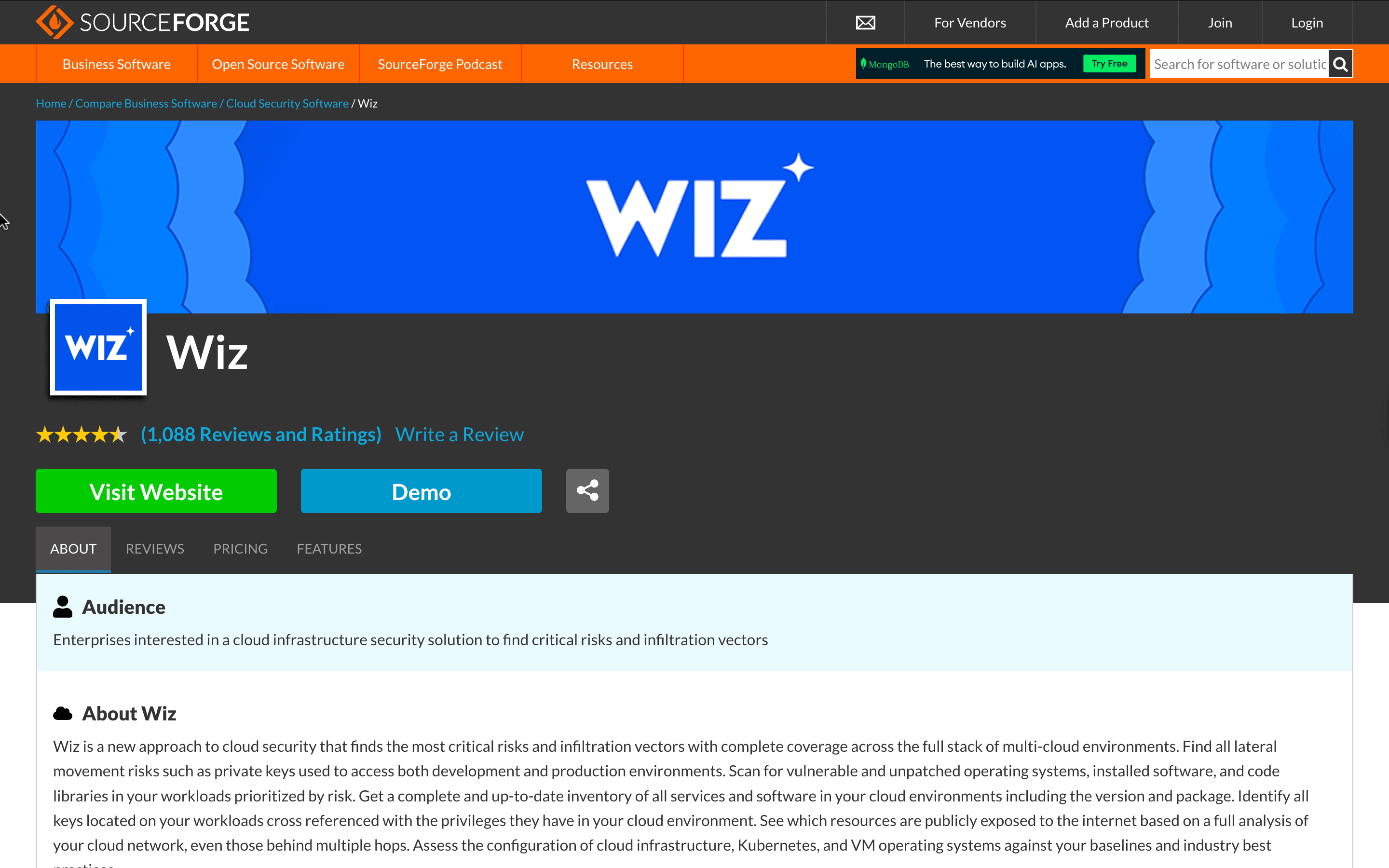
8. TrustRadius
Buyer intelligence platform offering in-depth reviews; officially expects 100 customers to allow a listing but is known to be flexible.

TrustRadius collects long-form reviews with detailed use cases, helping buyers understand real-world outcomes, not just feature lists. It has more than 20 categories for security products, actively encourages vendors to collect reviews and offers badges to the most trusted and loved products.
TrustRadius listing is probably not something you want to start with (they require 100 customers and with their 10% share of G2's traffic are not as impactful) and once you do, try Blastra's TrustRadius management—it makes opening a listing easier.
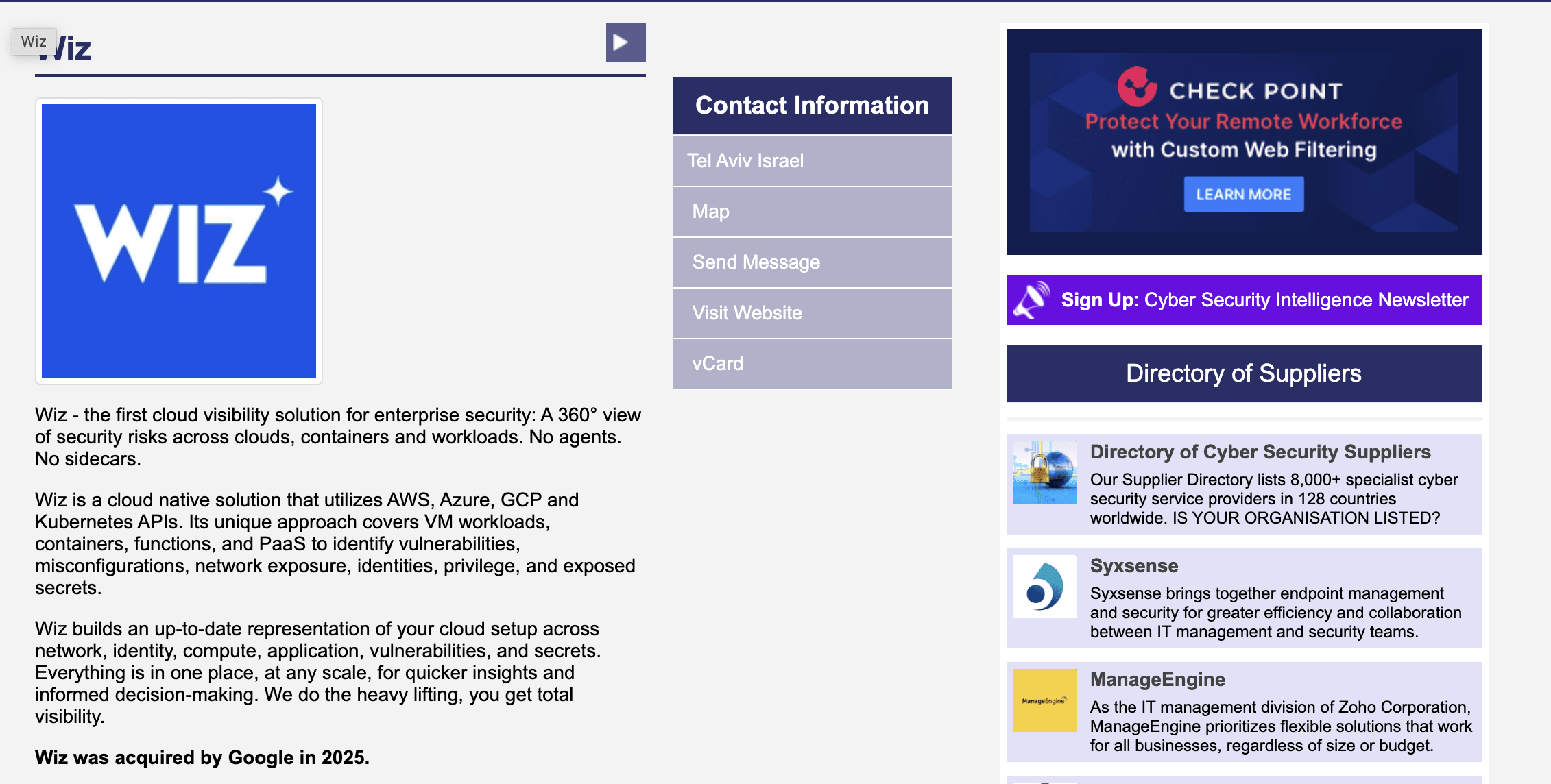
9. Cyber Security Intelligence
Cybersecurity news site, newsletter, and supplier directory.

Cyber Security Intelligence combines editorial content—website and newsletter—with a supplier directory, giving companies exposure to a broad cybersecurity audience beyond strict product comparison sites.
There's no user reviews or ranking system, so it won't hurt to list there and simply let the listing run—but also don't expect much out of it.
Company-Focused Directories
For brand recognition, investor visibility, and inclusion in market maps.
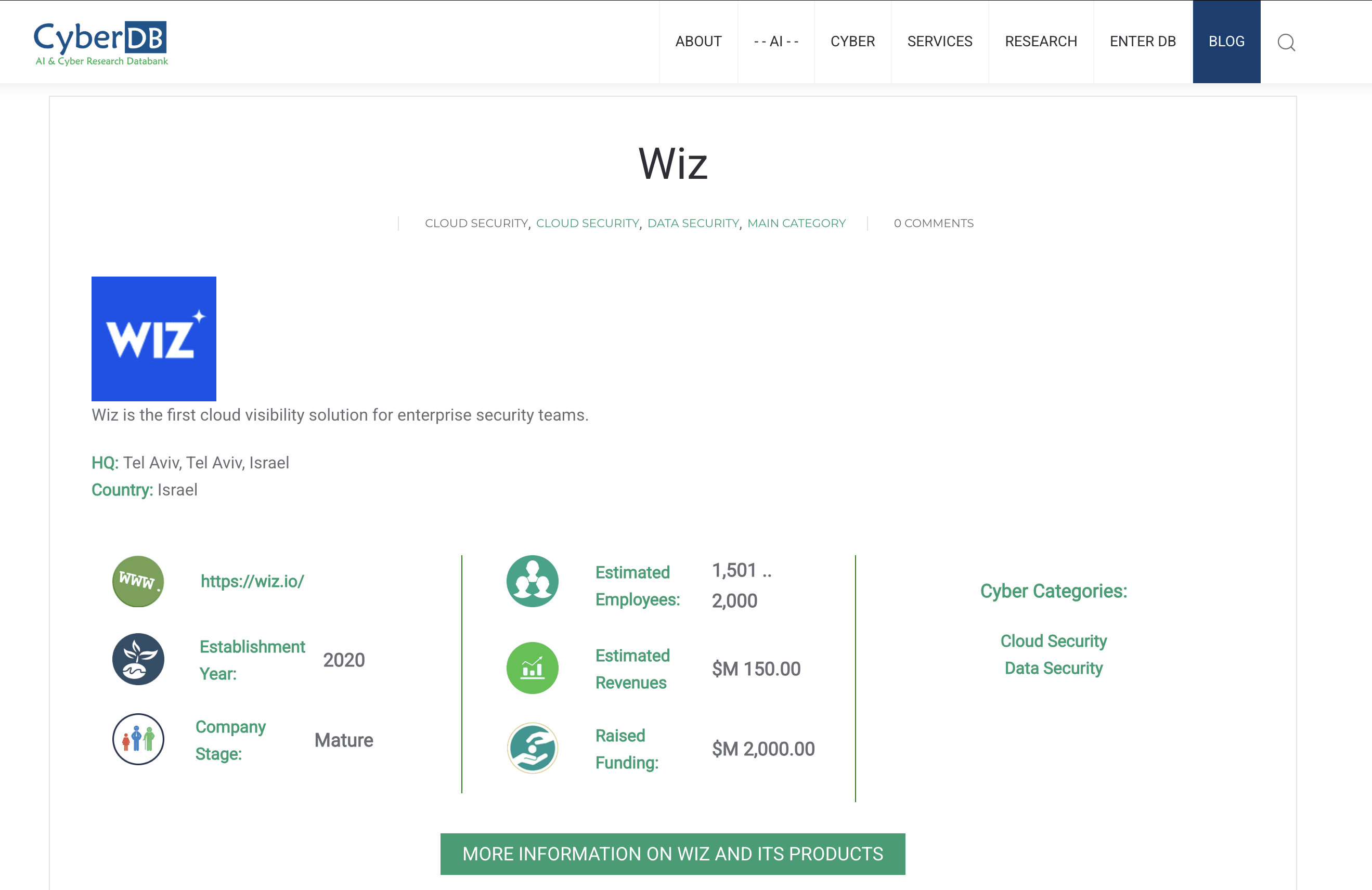
10. CyberDB
Research platform with curated data on cyber and AI vendors.

CyberDB's audience are CISOs, CIOs and CTOs that use it as a platform for vendor research and vetting. The directory was founded by cyber veterans who have strong industry ties, and it manually curates cybersecurity and AI vendors, keeping the directory clean and focused (or some may say a bit old-school). However it is frequently referenced in research reports and ecosystem maps.
Submission is handled via a contact form and can take time until you hear back.
11. Crunchbase
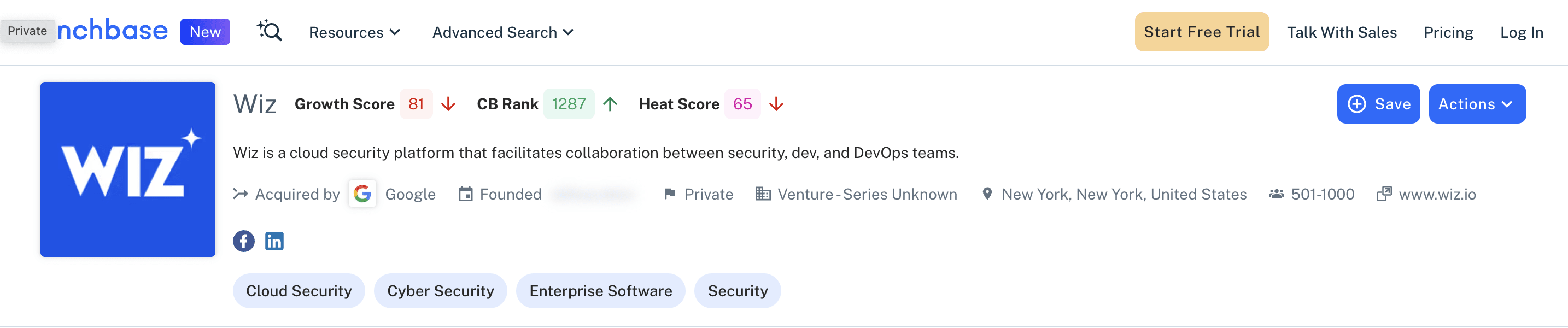
Global database of startups and tech companies; tracks funding and company details.

Widely used by investors, journalists, and analysts. Helps AI systems understand company relationships and timelines. Without specific connections to cyber, it is still a place where cybersecurity companies get found and evaluated.
An absolute no brainer, there's little effort to submit and you are probably already there—just make sure you claim and update your listing.
12. Startup Nation Central
(Israel only)
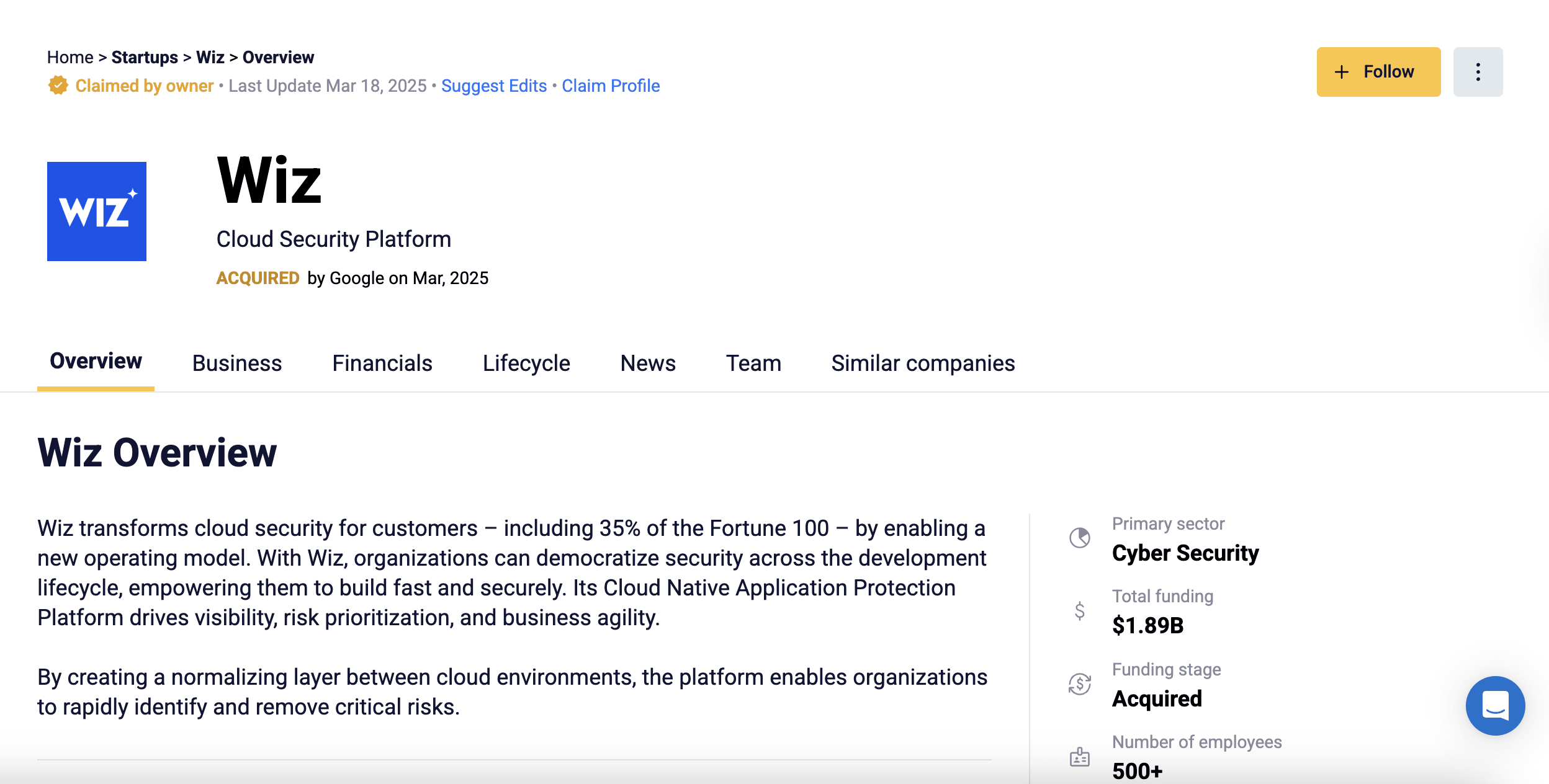
Major Israeli innovation ecosystem database with strong cybersecurity coverage.

Used by international delegations, investors, and corporations researching the Israeli cyber landscape. It regularly issues market reports, including Israeli security market maps, which feature companies present in the database.
If you are an Israeli cyber company, you have to be there—it is a staple on lists of any international delegation coming to Israel.
FAQ
Which directories are best for enterprise cybersecurity vendors?
PeerSpot and Gartner Peer Insights. PeerSpot specializes in enterprise IT/cybersecurity (SIEM, SOAR, XDR, IAM). Gartner Peer Insights carries analyst credibility and is heavily referenced in enterprise procurement.
How do Capterra, GetApp, and Software Advice relate to each other?
All three share the same account, taxonomy, and reviews (now owned by G2). Listings aren't automatic — you must explicitly request and populate GetApp and Software Advice separately.
Should I prioritize Capterra or Gartner Peer Insights?
Depends on your target. Capterra: mid-market buyers, 50+ localized domains. Gartner Peer Insights: enterprise buyers, analyst credibility. Choose based on your primary segment.
How important are reviews for directory visibility?
Critical on G2 — everything is built around reviews. Aim for 10+ fresh reviews per quarter. On SourceForge, reviews matter less. Learn more in our review guidelines.
Do niche directories like CyberDB matter for AI visibility?
Yes. AI uses "query fan-out" across dozens of sources including niche directories. CyberDB provides contextual signals helping AI understand your cybersecurity positioning.
What's the difference between product-focused and company-focused directories?
Product directories (PeerSpot, G2) emphasize features, integrations, reviews. Company directories (CyberDB, Crunchbase) emphasize team, funding, trust signals. Appear in both types.
How often should I update my directory listings?
Quarterly minimum. Fresh content may carry 3x the weight of stale pages in AI retrieval. Update immediately after product changes, integrations, or pricing updates.
How can Blastra help with directory management?
Blastra centralizes submissions across directories, keeps information consistent, and reduces manual work. Check pricing plans for packages suited to cybersecurity products.
Get on the List or Report an Error
Want to be included in this list? Found a mistake? Drop us a line at ceo@blastra.io
You Might Also Like
- More Than Backlinks: How B2B Software Directories Shape Your AI SEO Strategy — Why niche directories now matter for AI discovery
- How to Get Your Software Ranked on G2 (and Why Invest in It at All) — Master G2's scoring algorithm and earn badges
- G2 and Capterra Review Guidelines — Ensure your reviews pass verification checks
- Building Competitive Advantage Through Strategic Directory Presence — Create lasting advantage through directories
- Introducing Visibility Posture — See what your directory presence actually looks like
- SaaS Review Strategy: How to Stand Out Where Others Stay Silent — Turn reviews into competitive advantage
Want to get listed on top software directories?
Blastra automates the submission process and listings management for B2B software companies