

We've released an Alpha version of Visibility Posture.
After checkout, our agent runs an assessment of your presence across software directories. It checks four things — and each one is a deliberate choice about what matters.
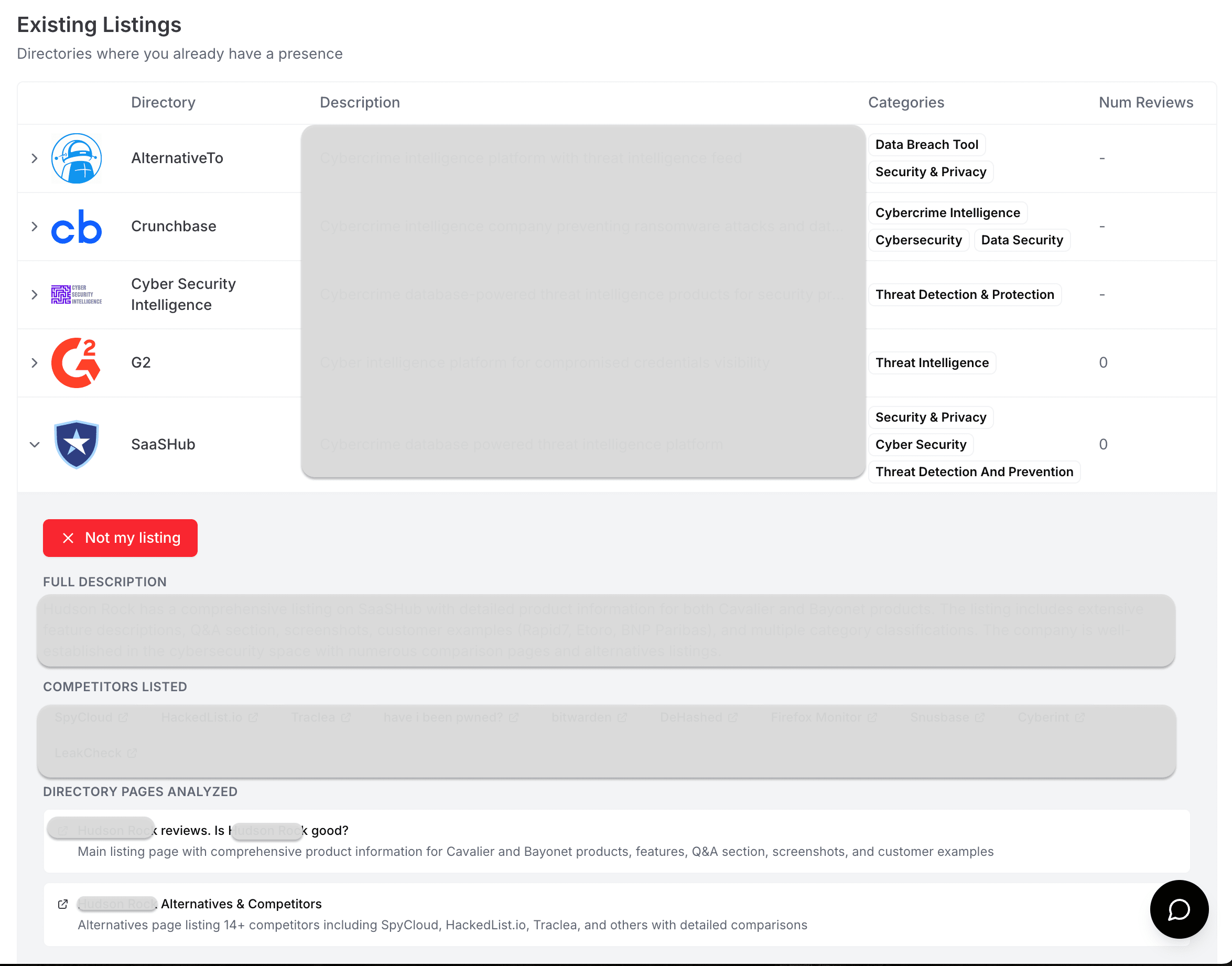
Where you are. Which directories have an active listing for you. Some were created by you, some by a former employee, some auto-generated by the platform itself. The agent finds what actually exists.
What category you're in. How each platform classifies your product. Category determines which comparison pages you appear on and which searches surface you.
What AI understands about your product. What a language model can extract about what you do, who you serve, and what makes you different — from your third-party presence, not your own website. This is the view from outside.
How many reviews you have, per platform. No quality judgment yet — just the count. Volume tells you where you stand relative to others in your category.
From there, you can select new directories to get listed on, or flag existing ones you want us to manage and keep current. The next phase adds review sentiment — what your reviewers consistently say, not just how many you have. After that: scoring, so you can assess your visibility posture at a glance and act on it.
Why SaaS Product Visibility Matters More Than Your Website
On your website, you choose which testimonials to publish and which feedback stays internal. You are biased. On a review platform, you don't control what gets written, what gets published, or how it reads. That's what makes reviews evidence.
Savvy buyers know that. Since the early 2000s, they've been shopping for software on directories that offer convenient ways to compare apples to apples — and to quickly understand what verified users actually say in unedited reviews.
AI by itself isn't that savvy yet. When asked, it gives you surface-level information — and being present on directories helps you show up in those answers. A savvy buyer will then use AI to dig beneath the surface: what do real users say across multiple platforms? That investigation is now faster and cheaper than it's ever been.
But AI is getting better. We believe the next phase of software discovery via AI will be presenting deeper findings without being asked. And those deeper findings live in the same place — software directories with verified reviews. It's where authentic information lives. It's also where the most structured data lives — products categorized, grouped, and reviewed in a format AI can read efficiently without scraping the entire web. According to AirOps research (October 2025), brands are already 6.5x more likely to be cited through third-party sources than through their own domains.
Why we call it "posture"
We borrowed the term from cybersecurity. In cyber, "security posture" is an organization's overall readiness to identify, prevent, and respond to threats — assessed continuously and improved as the landscape changes. Nobody treats security as a one-time project. You assess your posture and maintain it.
The same logic applies here. Your visibility posture is the state of your presence across directories and review platforms. It changes as your product evolves, as platforms update their taxonomy, as new reviews come in or stop coming in, as competitors improve their own presence. It needs ongoing attention — assessment, then maintenance.
That's what we're building toward. The assessment tool shows you where you stand. The platform and SaaS listings management service help you maintain and improve it.
See your visibility posture
After checkout, our AI agent assesses where you appear, how you're categorized, what AI understands about you, and your review footprint across directories.