

G2 released its Spring 2026 Reports on March 17, 2026 — 27,019 reports across 1,351 software categories. This post walks you through what changed, what it means, and what to do next.
What is a G2 report?
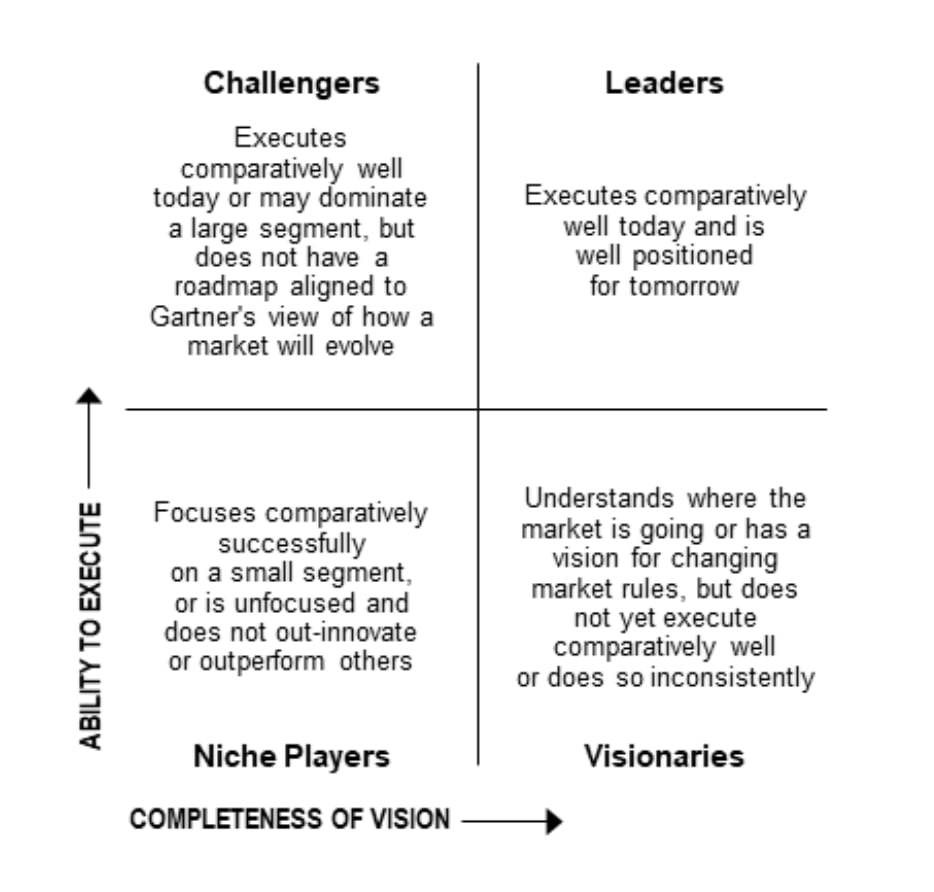
If you've heard of Gartner's Magic Quadrant, G2 reports are the crowdsourced version. Gartner has analysts spend months evaluating vendors and plotting them on a four-quadrant chart. G2 does the same thing algorithmically, based on user reviews instead of analyst opinion, for free instead of tens of thousands of dollars, and at much larger scale.
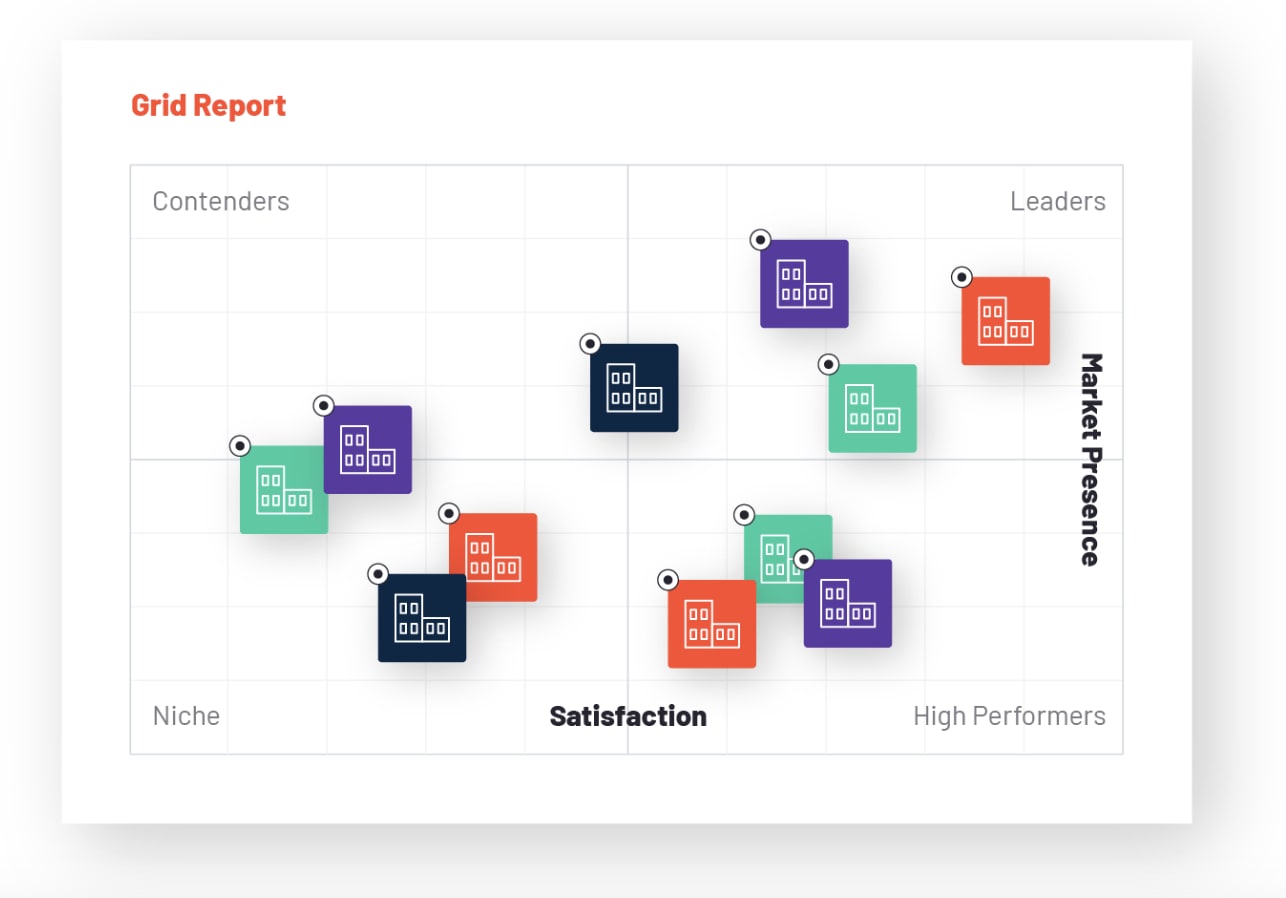
Every quarter, G2 takes a snapshot of review data and generates ranking reports for each software category. The main report is the Grid — a chart plotting products on Satisfaction (review scores) versus Market Presence (company size, review volume, web traffic). Products land in one of four quadrants: Leaders, High Performers, Contenders, or Niche. If your product lands in a quadrant, you earn a badge — those images companies post on LinkedIn every quarter. Grid badges require a paid G2 profile to display on your website, but the placement itself is earned through reviews. The badge is the main practical output: third-party validation for sales decks, websites, and marketing.
G2 doesn't publish one report per category. For each category, G2 generates the main Grid, plus Momentum reports, Index reports (usability, implementation, relationship, results), and slices all of these by company size and region. One category can produce a dozen or more reports. "27,019 reports" is roughly 1,351 categories multiplied across all these variants. For a single-product SaaS company in 2-5 categories, appearing in 10-40 reports is normal.
What this quarter's data tells you
The Leader badge is getting scarcer. G2 says only 3% of products earned Leader status this quarter, down from 4% in their Spring 2025 announcement. The denominator is important here — G2 has over 150,000 products listed, most of them dormant profiles with few or no reviews. The 3% is calculated against that entire pool. G2 doesn't publish what percentage of Grid-eligible products (those with 10+ reviews in a category) earn Leader, which would be the more useful number.
What this does tell you: the total number of products on G2 is growing faster than the number earning Leader badges. If you're targeting a Leader badge, the categories you choose matter — a less crowded category gives you better odds.
Five of the twelve fastest-growing categories are AI. Agentic AI added 30 products this quarter. AI Agents added 26. AI for Business Operations added 15. AI Customer Support Agents added 12. And Answer Engine Optimization (AEO) added 12.
AEO is worth a closer look. This category launched in March 2025 with 7 products and grew to over 150 by January 2026 — over 2,000% in under a year. AEO tools help companies track whether AI systems like ChatGPT and Perplexity are recommending their product. These tools exist because AI is becoming a channel for software discovery, and companies need to know whether they're being recommended.
G2 also created a Large Language Models category this quarter — meaning G2 now ranks the same AI systems that cite G2 data when generating software recommendations. According to a Semrush study G2 references, G2 is among the top 20 most-cited domains in LLMs.
This matters even if your product has nothing to do with AI. AI systems pull from review platforms when buyers ask "what's the best tool for X." Your G2 reviews and directory presence are part of what they read. We wrote about how that works and what you can do about it.
Sixteen new categories became report-ready. Among them: Application Security Posture Management, Data Security Posture Management, Secure Enterprise Browser, Semantic Layer Tools, and Large Language Models. When a category first becomes report-ready, few products have badges — earning a placement is meaningfully easier than in a mature category with hundreds of competitors.
G2 now owns Capterra, Software Advice, and GetApp. These reports were published after G2 closed its acquisition in early February 2026 of Capterra, Software Advice, and GetApp from Gartner for approximately $110 million. G2 has promised a unified taxonomy across all four platforms, but there's no public timeline for when that happens or what changes it brings to reports, badges, or category structure. The acquisition isn't mentioned in the Spring reports. For now, everything works the same way it did before the deal — but the landscape is in motion.
Making sense of the leaderboard tables
G2's announcement includes several ranking tables. Here's what they measure.
"Companies with most reports" — Microsoft (5,178), Zoho (4,429), Salesforce (3,993). This ranks product portfolio breadth. These companies have dozens or hundreds of products, each generating reports. Zoho's 32% jump means more Zoho products qualified in more categories — a category-spread strategy. If you're a single-product company, this table measures a different game.
"Products with most #1 rankings" — Google Workspace (407), Canva (328), Slack (303). Dominated by widely adopted products with large Market Presence scores. G2's Market Presence axis weighs employee count and revenue, which gives larger companies a structural advantage for #1 rankings.
"Top products by G2 Score" — Visual Studio Code (98.52), Microsoft SharePoint (98.29). Looks different from the #1 rankings because it's calculated differently. Your category-specific Grid placement matters more than your global G2 Score.
What matters for most vendors: Your placement in the Grid quadrant for your specific categories. That determines your badge. A small company with strong reviews lands as a High Performer — high satisfaction, lower market presence — which is a meaningful and realistic target.
What to do next
The starting point is knowing where you stand. Where are you listed? What categories are you in? Do you have reviews? Are there badges you've earned and don't know about?
Blastra checks this for you. When you sign up, we scan your current directory presence across G2, Capterra, SourceForge, and other platforms — and show you what's there, what's missing, and where you should be. A security team we recently onboarded discovered a SourceForge Leader badge they didn't know about and listings being managed by people who'd since left the company.
If you want to earn a G2 badge: You need at least 10 reviews in a category to appear on the Grid. The next deadline is approximately April 28, 2026 for Summer reports. Focus on 2-3 categories — especially newer ones with less competition, or consider creating a category if none fits your product. Aim for High Performer.
If you're already earning badges: Consider diversifying across directories. G2 owning Capterra means more concentration in one ecosystem. Presence on TrustRadius, PeerSpot, SourceForge, and others is a hedge — and AI systems cite multiple sources when recommending software.
If managing all of this sounds tedious: It is. That's what we do.
Know where you stand across every directory
Blastra scans your presence on G2, Capterra, SourceForge, and dozens of other platforms — and shows you what's there, what's missing, and what to do next.
Or you can try navigating the Grid yourself. Dodge bad reviews, land in the right quadrant, earn the badge — all in 90 seconds. In real life, we handle that part.
BADGE SWEEPER
Navigate the grid. Dodge the bad reviews.
Click any cell in Ok to start. Right-click to flag. Long-press on mobile.
This post references G2's Spring 2026 Reports published March 17, 2026, and G2's publicly available scoring methodology documentation. Numbers reflect the data as published by G2 and may change as reports are updated.
Related
- How to Earn G2 Badges in 2026 — Badge requirements, paid vs. free profiles, and review thresholds
- How G2's AI Categories Work — 29 new AI categories and what they mean for your listing strategy
- G2 + Capterra Acquisition: What It Means for Vendors — Strategic analysis of the consolidation
- How to Get Ranked on G2 — G2's scoring algorithm, Grid placement mechanics, and review thresholds
- 25 Software Badges Decoded — Requirements for badges across G2, Capterra, SourceForge, TrustRadius, PeerSpot, and Gartner