

TL;DR
Creating a new software category used to be a deliberate strategic play - something companies like Gong did to redefine a market. Now it's a routine problem for founders building with AI. New product types are emerging faster than directories and analysts can categorize them, and the category you belong in may not exist yet. This guide walks you through how to get it created.
- Start with G2. It's the only major platform with a documented, vendor-accessible path for requesting a new category.
- You need approximately ten products in the space before G2 will create one. The competitors list is the most important part of your submission.
- Other platforms range from opaque to impossible. Gartner Peer Insights has a suggestion form. TrustRadius accepts email requests. Capterra (now owned by G2) has no path yet. Trustpilot's categories come from Google - there is nothing to request.
- Don't wait to list. Pick the best available category while your request is pending. You can move later.
Whether rigid software taxonomies are even the right model for how buyers discover products is a separate question, worth asking but outside this guide. For now, categories are how directories work, and directories are where buyers and AI look.
Taxonomies Can't Keep Up with AI
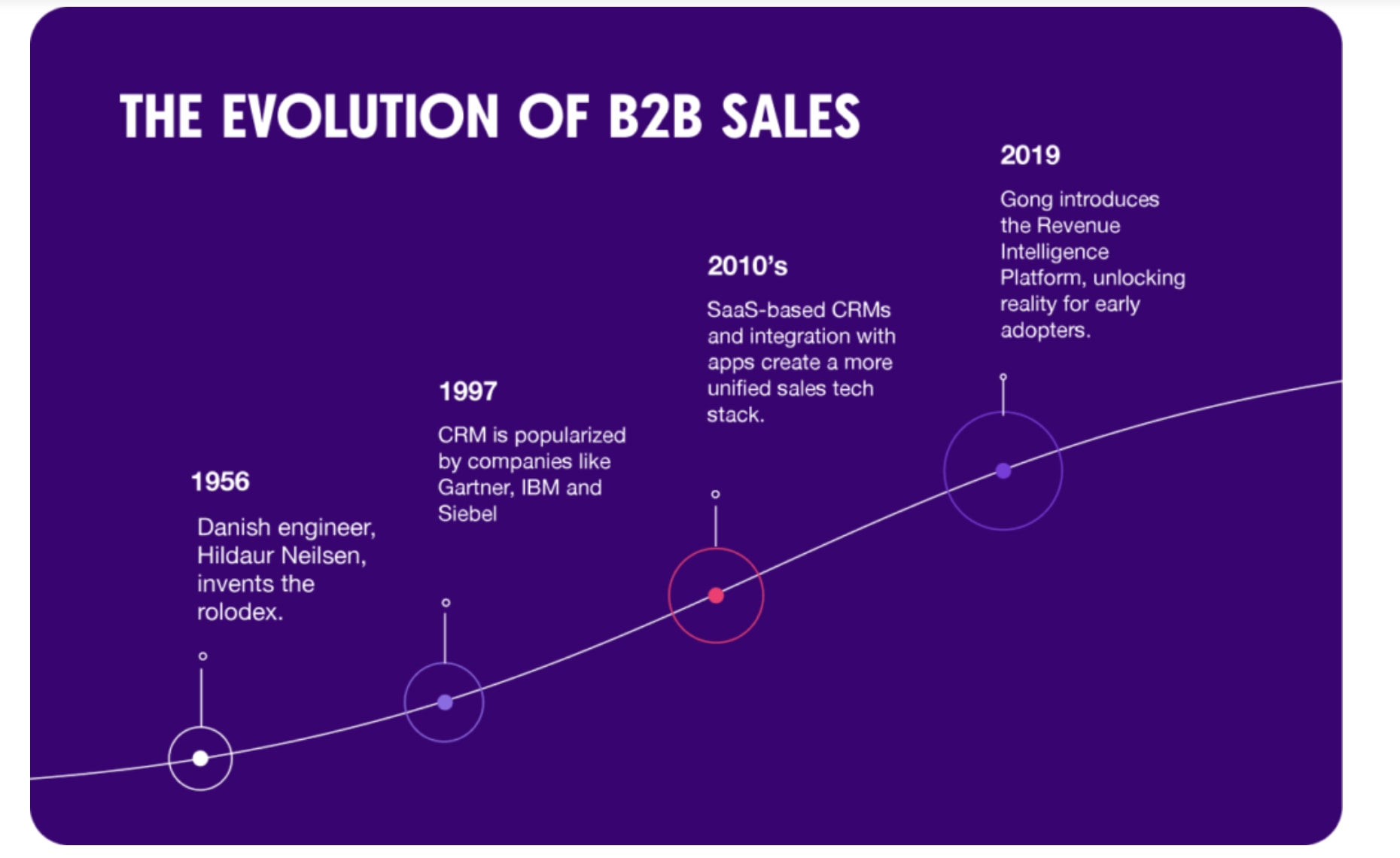
Back in 2019, Gong spent months building vocabulary, briefing analysts, and running content campaigns before G2 formalized "Revenue Intelligence" as a category. That was a choice: a company deciding to name a market. Gong's former CMO Udi Ledergor wrote the playbook for this path in Courageous Marketing, and it's worth reading if you're considering category creation as a strategic initiative.
What's happening now is different. AI created an explosion of product types that didn't exist three years ago, and directory taxonomies haven't caught up. Some platforms are faster than others - SourceForge, with over 4,000 categories, appears to be the quickest at adding AI-specific distinctions. G2 has been adding AI-specific categories at a high pace through 2025 and into 2026 (for a deeper look, see our guide to G2 AI categories). But many platforms are behind, and gaps remain across all of them. Founders are building real products, selling to real customers - and when they go to list, the category that describes what they built either doesn't exist or describes how things were done before AI.
We're seeing this with several Blastra clients right now. Their products use AI to do something that directory categories only cover in their pre-AI form — and the mismatch means reduced visibility in the places where buyers and LLMs look first.
This guide helps you get a new category created on directories — which, if you move early, can put you ahead of the competition before the category fills up.
Do You Actually Need a New Category?
Before submitting a request to any platform, one question matters: is your product distinct from what existing categories describe, or does it belong in an existing category with better positioning?
New categories represent new solutions, not better versions of existing products. The test is features. A product that does what CRM software does but faster belongs in CRM. A product that captures a different type of data, operates in a different workflow, or produces a different output may warrant its own category. Across platforms, analysts and research teams evaluate category requests by comparing feature sets against current definitions. The test is whether the product is different, not whether the vendor believes it is.
You also need peers. A market with only one participant hasn't been validated as a market yet. Sangram Vajre, co-founder of Terminus, learned this when building the ABM (Account-Based Marketing) category. When an analyst firm tried to push Terminus into an "advertising" bucket, Vajre invited five competitors to form a consortium and collectively argue they were all ABM platforms. Six months later, the analyst created the ABM category. A category with ten companies in it is worth more to each of them than a market with one company claiming a space nobody recognizes.
If you can name roughly ten products that do something similar to yours - even if they approach it differently or serve different audiences - you have a case. If you can name three, you may be too early for most platforms.
Platform-by-Platform: How to Request a New Category
G2
G2 is the only major B2B software directory with a documented, vendor-accessible process for requesting a new category. Based on the SuprSend case and G2's own guidance, roughly ten products in the proposed space appears to be the threshold before G2 will create one.
How G2 adds new categories
G2's Market Research team drives category creation. Analysts cover different industry segments, monitor market developments, speak with vendors and buyers, and identify emerging spaces. Vendor requests are one input into that process.
G2 publishes upcoming new categories on its Research Agenda. As of early 2026, the queue includes AI Security Platforms, AI-Security Posture Management (AI-SPM), AI AppSec Assistants, Revenue AI, AI Interview Assistants, and AI Medical Diagnostic Platforms, among others. The Research Agenda also shows recently added categories, category updates, and category deletions. G2 does sunset categories — though deletions have been rare enough that the current agenda reads "N/A."
How to submit
The process, documented by SuprSend's founder on Indie Hackers after successfully creating the "Notification Infrastructure" category:
- Go to G2 Support and click "Contact Support"
- Sign in with your G2 credentials
- Submit a new case with the subject "Change / Add New Category for Your Product"
- Complete the form with: proof that your product warrants a new category, proposed category name, eligibility criteria for inclusion, and ten competitors that fit the new category
- The case gets assigned medium priority and the support team responds within 2-3 days
G2 then contacts representatives from the ten companies you identified, verifies the need for the new category, and conducts follow-ups. Any vendor with a G2 profile can submit - a paid relationship with G2 is not required.
Timeline and outcomes
In SuprSend's case — the most detailed public account of this process — the full cycle took approximately four months from submission to the category going live. SuprSend became the top-ranked product in the "Notification Infrastructure" category they helped define.
The outcome is one of three things: approval (the category is created and you're placed in it), backlog (the market is recognized as emerging but not yet mature enough), or rejection (the feature set didn't clear the bar of distinction from existing categories). According to G2's own documentation, about 40% of submissions are either rejected or backlogged. G2 hasn't published the specific criteria that determine which outcome you get.
Gartner Peer Insights
Gartner Peer Insights uses "market" where other platforms say "category," and the distinction matters. A GPI market is tied to a Gartner research area: Magic Quadrants, Market Guides, and the analyst coverage that goes with them. Requesting a new market on GPI means proposing that Gartner's analyst organization recognize and cover a new research space.
The vendor portal has a new market suggestion form. The GPI Market Alignment team will review it within 7 to 10 days for an initial determination, at their sole discretion. What happens after that initial response - and how long full market creation takes - isn't published.
Submitting is worth doing - it puts the request on record and signals demand. The realistic expectation is that it's one data point in a much larger research process.
Contact for questions: peerinsightsvendorsuccess@gartner.com.
TrustRadius
TrustRadius adds new categories regularly. Vendors can request a new category by emailing support@trustradius.com. The process is informal - no published criteria, timeline, or form.
Capterra
Capterra has no published process for requesting a new software category. Their listing guidelines state that products must fit, at Capterra's sole discretion, within an existing category.
G2 acquired Capterra (along with Software Advice and GetApp) from Gartner in February 2026. G2's acquisition announcement specifically mentioned taxonomy unification as part of the plan. If Capterra's taxonomy converges with G2's more flexible model — which we expect — a category you establish on G2 now may carry over to Capterra later. For a deeper look at what the acquisition means for vendors, see our analysis of the deal. Another reason to start the G2 process first.
SourceForge
SourceForge has over 4,000 categories - the largest taxonomy of any directory. We have not found a process for requesting an entirely new category on SourceForge. If you've navigated this, reach out to ceo@blastra.io.
Trustpilot
Trustpilot's categories are based on Google My Business categories. New ones cannot be suggested. Trustpilot's FAQ states this directly.
PeerSpot
We have not found a published process for requesting new categories on PeerSpot. If you've navigated this, reach out to ceo@blastra.io.
What to Do While You Wait
Category requests take time — four months in the SuprSend case on G2. Other platforms don't publish timelines at all.
Don't let that stall you. Pick the best available category and get listed. A wrong-but-close category is better than no listing - buyers can still find you in comparison lists, and reviews you collect now transfer when you move categories later. Check where your direct competitors are listed and mirror their category choices where it makes sense. On G2, if nothing fits well, you may end up in one of their "Other" catch-all categories - like "Other AI Tools" or "Other Marketing Tools" - which exist specifically for products that don't map to an established category yet. That's where Blastra is listed right now, because there's no "SaaS Listings Management" category on G2. It's not ideal, but it's a foothold.
The most important thing you can do while waiting is collect reviews. Reviews follow the product, not the category. Ten reviews in a traditional category today become ten reviews in the AI-specific category tomorrow, and those ten reviews are what unlock G2 Grid eligibility, badge placement, and quarterly reports. Our guide to getting G2 and Capterra reviews covers the mechanics. Start building your review footprint now — it compounds regardless of which shelf you're on.
After a New Category Goes Live
Reviews are the first priority. On G2, a product needs at least ten reviews in a category to qualify for Grid report eligibility. Other platforms have similar thresholds. Without enough reviews, your listing exists but doesn't appear in the rankings and reports that buyers actually use.
New categories have a window. When a category is new, few products have enough reviews to qualify for reports and badges. The competition for top placement is dramatically lower than in mature categories with hundreds of established competitors. Profound is a clear example: when G2's AEO (Answer Engine Optimization) category earned its first Grid Report in Winter 2026, only 9 products qualified for the Grid even though over 150 were already listed in the category. Profound earned Leader status and used that recognition as part of their narrative around a $96 million Series C. That window closes as more products collect reviews. There's also an AI visibility dimension: G2 is among the most-cited domains by LLMs like ChatGPT and Perplexity. A Leader badge in a category means structured, high-authority data that AI systems can reference when recommending software - which matters more in a new category where few other signals exist.
Help define the vocabulary. G2 tends to rank highly for "[category name] software" searches on Google. Once your category is live, every piece of content you publish using that category name drives buyers toward your G2 listing through organic search. Vendors who run PR around the category name, publish content teaching buyers the vocabulary, and build the narrative publicly tend to establish the association between their product and the category before competitors can. G2 also offers to collaborate on announcement content when new categories go live.
Spread across platforms. A new category on one directory is one shelf. Getting your product recognized across multiple directories - in whatever categories fit best on each - gives you more surface area for buyers and AI systems to find you. Category gaps are often the primary reason for a weak visibility posture - Blastra's assessment can show where yours stand.
Sources
This guide draws on publicly available documentation from each platform, plus two first-hand accounts of category creation:
- G2: "What Every Category Designer Needs to Know About G2" — category creation criteria, 40% rejection/backlog rate
- G2 Research Agenda — upcoming new categories and report schedules
- Indie Hackers: "If You Can't Get #1 on G2, Create a New Category" — SuprSend's step-by-step account of creating the Notification Infrastructure category
- Gartner Peer Insights: Getting Listed — vendor onboarding and market suggestion process
- TrustRadius: How Product Categories Work — category management and requests
- Capterra Product Listing Guidelines — category placement policy
- Trustpilot FAQ: How Do I Change My Category — confirms Google-based category system
- Udi Ledergor, Courageous Marketing (2025) — Gong's category creation playbook
- Sangram Vajre on ABM category creation — Behind the Category podcast, May 2023
- G2 acquires Capterra, Software Advice, and GetApp — January 2026
Related Guides
- How G2 AI Categories Work — 29 new AI-specific categories, which ones still have room, and how to get listed
- How to Get G2 and Capterra Reviews — Review collection mechanics for both platforms
- How to Get Ranked on G2 — G2's scoring algorithm, Grid placement, and review thresholds
- How G2 Badges Work — Badge requirements, costs, and deadlines for 2026
Want to get listed on top software directories?
Blastra automates the submission process and listings management for B2B software companies