

Profound has removed the pricing from its website, which now lists only a free trial and a custom Enterprise plan. The review sites it is listed on still have them: G2, Capterra, TrustRadius and Software Advice all feature Starter at $99 a month and Growth at $399.
According to recent research Profound co-authored, AI rarely relies on a company's website alone when it answers a pricing question. Across six AI engines asked about the pricing of the Cloud 100, the company's own pricing page appeared in under half of the answers and came first in only about one in eight. Third parties filled the gap, with G2 appearing in roughly one answer in six. So every day, AI can quote Profound's old Starter and Growth plans to the people asking what Profound costs.
At Blastra, we focus on monitoring and correcting the sources AI trusts. We track every directory our customers are listed on, and their websites, including the pricing pages. When we notice a significant change like this one, we tell the customer about the drift and make the updates on their behalf.
A fresh date on an old listing
If you don't control your narrative, someone else does, and it hurts. We now see this situation often: a company does not manage its listing on a review site, so the listing carries an old product name, an outdated description and pricing that has long been gone. Yet the review site keeps putting a fresh date on it.
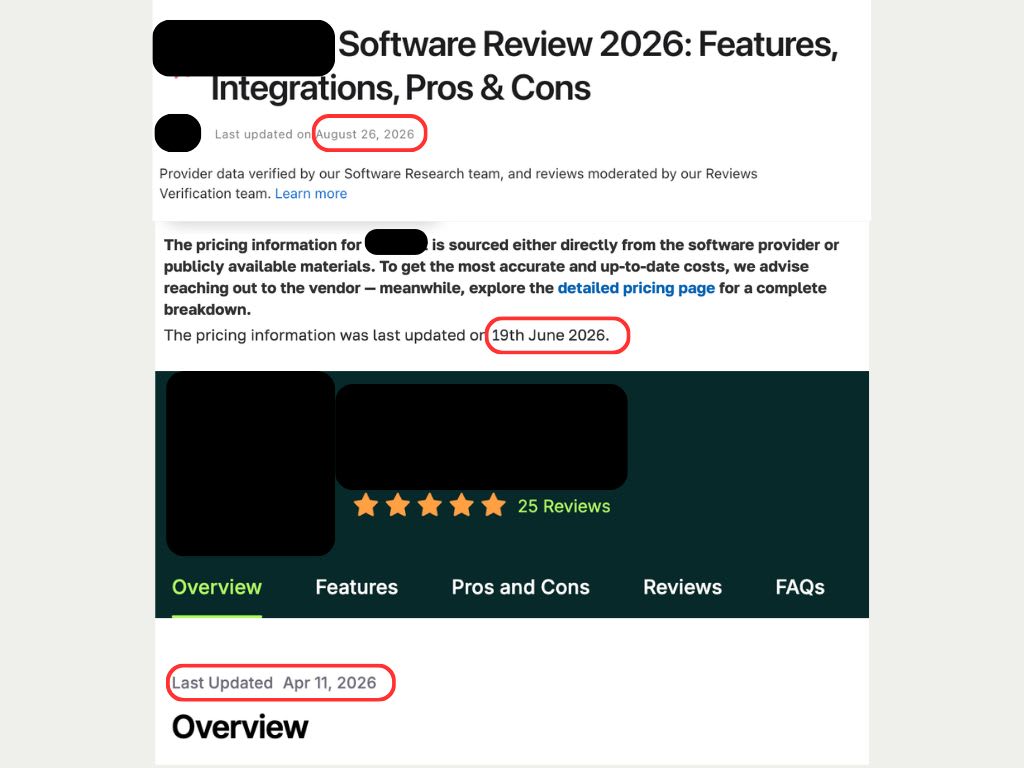
These are three different Blastra customers on three different directories. I know for sure that none of them touched those listings, and the pricing shown is wrong. I don't know what changes on the review site's side when the date moves. The listing reads as current either way.
Why AI believes the date
AI uses review sites for more than reviews. They list a lot of products in one consistent format, which makes them a convenient and cheap source of product information. The same listings also feed blog posts and listicles, which AI then reads as further sources.
So what AI finds is a listing marked as claimed and "updated on" a recent date. It is only logical to conclude that the information is current. From there, AI can repeat the wrong data to the person asking, or, when the listing disagrees with the company's other sources, leave the product out of the answer.
What keeping them in sync looks like
Recently one of our customers changed the copy on their website. They are live on 17 directories, including G2, Capterra and Gartner Peer Insights.
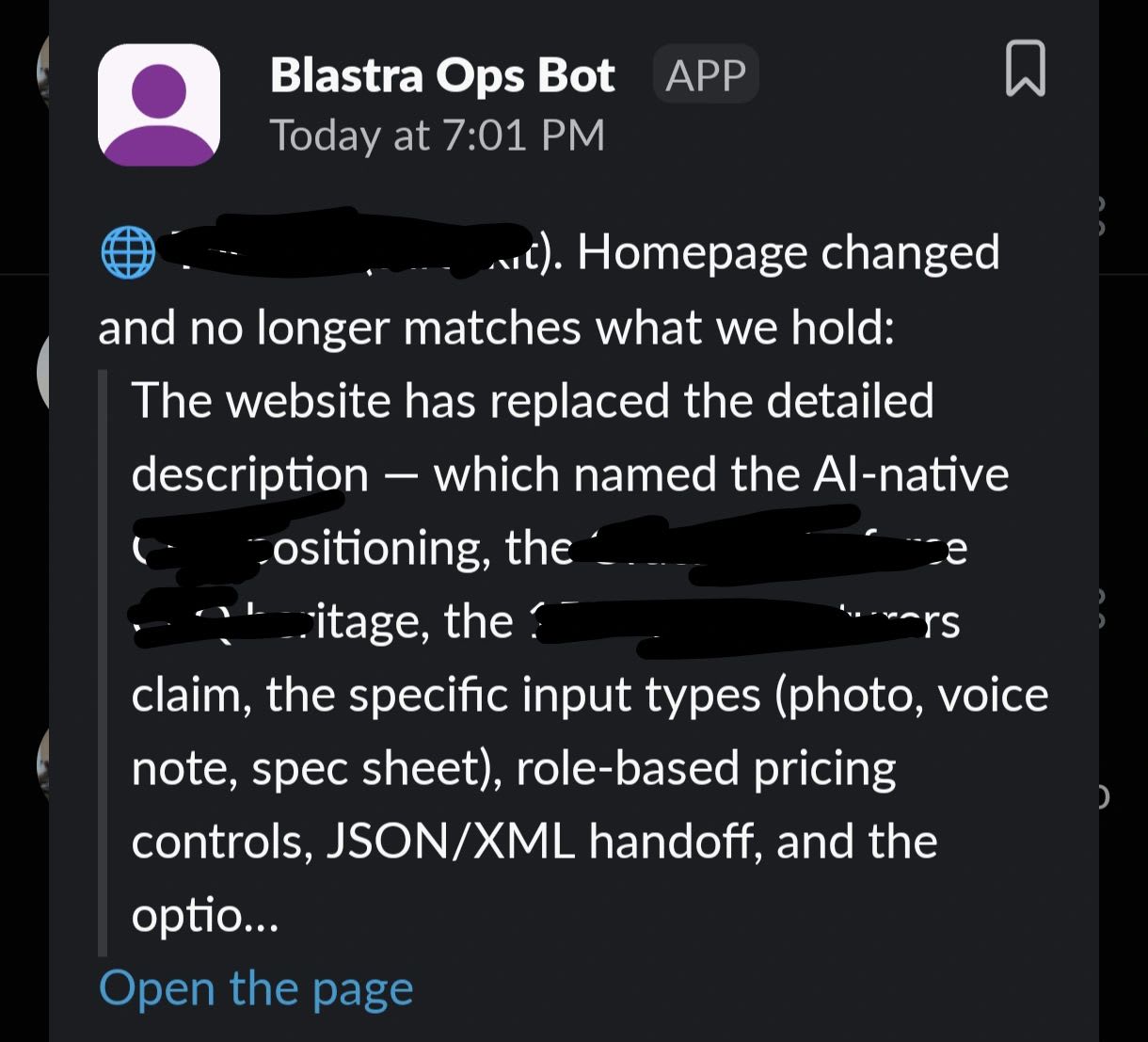
We received the alert above, and the customer received an email with Blastra's plan to refresh every profile we manage for them. The updates roll out over the following days, because some listings update instantly and some wait for the directory's approval, and the customer is told as each one goes live.
With AI working from multiple sources and rewarding a clear, consistent signal, there is no reason not to update your listings at the same time as your website.
Check where your old pricing lives
We put together the list of review platforms that feature your old pricing: every directory and review site that shows a vendor's pricing on its listings, what each one shows, and where to look. If you changed your pricing in the last year, start there.
Related Reading
- Review Platforms That Feature Your Old Pricing - What each site shows about your pricing, and how to check it
- Entity Consistency and AI Search Visibility - Why the same facts across directories decide what AI says about you
- The AI Search Consensus Pattern - How AI assistants pick the SaaS products they recommend